

You’ve probably seen “agentive” and “agentic” used almost interchangeably in your feed over the past year, usually next to a bold claim about AI doing your job for you. Neither word is made up, and neither claim is quite as simple as it sounds. If you run a website, manage content, or make decisions about where your marketing budget goes, it’s worth five minutes to actually understand what this term means because it’s starting to shape how search engines, AI assistants, and your own tools behave. what is agentive.
This guide breaks down what “agentive” actually means, how it applies to AI, how it’s different from the generative AI most of us already use, and what it practically means for anyone working in SEO or digital marketing right now. No hype, no “this changes everything overnight” just a clear explanation and an honest look at what’s proven versus what’s still shaking out.
What Does “Agentive” Actually Mean?
Before AI got hold of it, “agentive” was a linguistics term. In grammar, an agentive form or case identifies the “doer” of an action — the agent. The “-er” at the end of “worker,” “teacher,” or “reader” is technically an agentive suffix; it turns a verb into a noun that names whoever performs the action. what is agentive.
That original meaning matters here, because it’s exactly the idea that got borrowed for AI. Something described as agentive is defined by its capacity to act as an agent to initiate and carry out actions rather than simply respond or describe. what is agentive.
In tech and marketing writing today, you’ll see the word used in two closely related ways:
- Agentive AI — AI systems built to act as agents: making decisions, taking multi-step actions, and pursuing a goal with limited ongoing human input.
- Agentic AI — the more commonly used term for the same underlying idea, especially in enterprise software and AI research circles. what is agentive.
READ MORE: What Is an AI Agent in Simple Terms A No-Jargon Guide
In practice, most publications treat “agentive AI” and “agentic AI” as synonyms, and you’ll find both terms used to describe the same category of tools. If you’re researching this topic and see both spellings, don’t assume you’re looking at two different technologies you’re almost certainly not. what is agentive.
What Is Agentive AI, in Plain English?
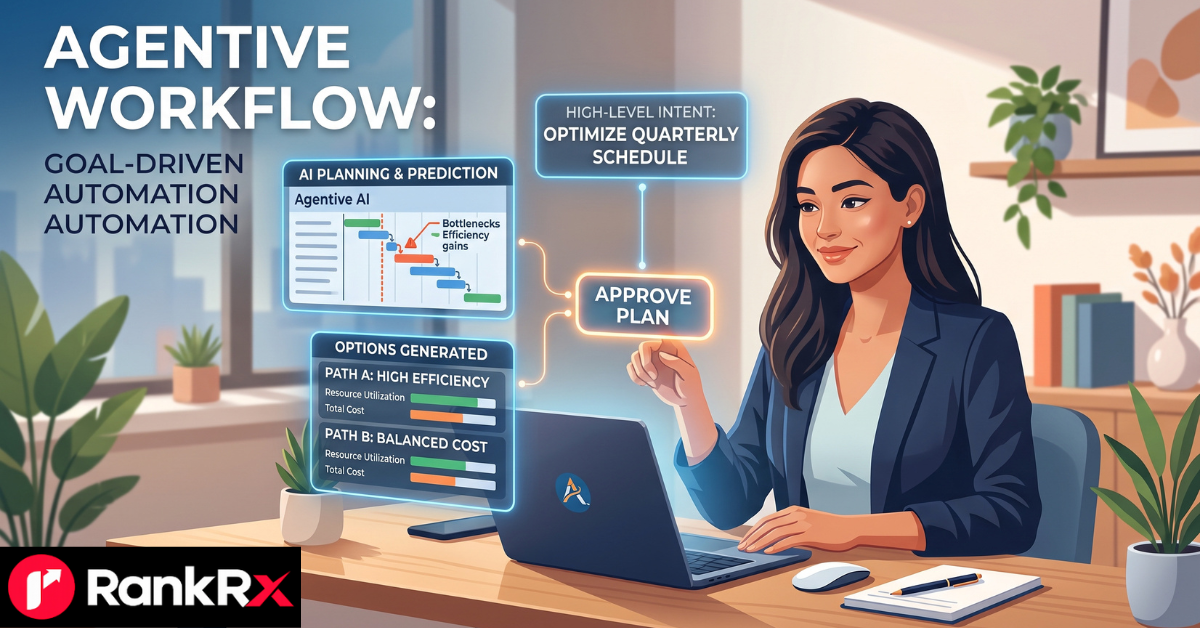
Agentive AI refers to AI systems designed to pursue a goal with a degree of independence, rather than just producing an answer to a single prompt and stopping there. Instead of waiting for you to ask a question and then handing back a response, an agentive AI system can plan a sequence of steps, use external tools, check its own progress, and adjust its approach — often with only limited check-ins from a human. what is agentive.
A simple way to picture the difference:
- Ask a standard AI chatbot to “write a product description,” and it writes one. That’s the end of the interaction.
- Ask an agentive AI system to “get this product listed and ranking,” and it might research competitor listings, draft the copy, check it against your style guide, publish it, and then monitor how it performs — flagging you only if something needs a decision it isn’t authorized to make. what is agentive.
The key ingredients that make a system “agentive” rather than just “generative” are:
- Goal-orientation — it’s working toward an outcome, not just answering a prompt
- Multi-step planning — it can break a goal into a sequence of actions
- Tool use — it can call external systems, APIs, or software to get things done
- Limited autonomy — it acts without a human approving every single step
- Some memory or state — it tracks what it’s already done as it works toward the goal
None of this means the system is unsupervised or unaccountable. Most agentive AI tools used in business settings are built with checkpoints, permissions, and human review built in — the autonomy is bounded, not unlimited.
Agentic AI vs. Generative AI: What’s the Real Difference?
This is the comparison most people are actually searching for, so let’s be direct about it. what is agentive.
Generative AI and agentic AI are not competitors — they’re different layers of the same stack. Generative AI is very often the “thinking” component that an agentic system relies on to draft text, summarize information, or reason through a step. Agentic AI adds the planning, tool use, and follow-through on top of that. what is agentive.
| Generative AI | Agentic AI | |
|---|---|---|
| Core job | Produces content in response to a prompt | Pursues a goal through a sequence of actions |
| Autonomy | Reactive — waits for your instruction each time | Proactive — can decide what to do next on its own, within limits |
| Memory across steps | Usually limited to a single session or conversation | Often tracks progress across a multi-step task |
| Tool/system use | Typically none, unless specifically connected | Core to how it works — calls APIs, software, or other tools |
| Typical output | Text, images, code, audio | Completed tasks, workflows, or decisions |
| Example | Drafting a blog post when asked | Researching a topic, drafting the post, formatting it, and scheduling it to publish |
| Where risk shows up | Inaccurate or biased content (a reader or reviewer problem) | Wrong or unwanted actions taken on live systems (an operational problem) |
Both categories fall under the broader umbrella of artificial intelligence, and the two are frequently used together — an agentic system will typically use a generative model as one of its internal components to write, summarize, or reason at each step. what is agentive.
Why This Matters Right Now for Marketers and SEO Professionals
You don’t need to become an AI researcher to care about this. Here’s where agentic AI actually intersects with the work most RankRX readers do day to day. what is agentive.
AI Search Is Becoming More Agentic
Search engines and AI assistants are increasingly moving from “answer a question” to “complete a task.” When someone asks an AI assistant to “find me the best CRM under £50 a month and compare the top three,” that’s an agentic workflow — the assistant is researching, comparing, and synthesizing, not just retrieving a single fact. what is agentive.
This matters for content strategy because it changes what “ranking” even means. Being cited, quoted, or pulled into an AI-generated comparison is becoming as important as ranking on a traditional results page — sometimes more so. Content that’s structured clearly, factually precise, and easy for a system to extract and reuse has an advantage here.
Agentic Tools Are Entering Marketing Workflows
Tools that can research a topic, draft content, check it against brand guidelines, and schedule it — with a human reviewing before anything goes live — are already in use across content teams, customer service, and technical SEO auditing. This isn’t a future prediction; it’s a current, gradual shift in how routine work gets done. what is agentive.
That said, the phrase “agentic AI” also gets used loosely in marketing — sometimes to describe tools that are really just generative AI with extra automation glued on. It’s worth asking any vendor making this claim exactly what decisions their tool makes on its own, and what a human still has to approve. what is agentive.
It Raises New Questions About Accuracy and Accountability
Because agentic systems take actions rather than just producing text, the cost of an error is different. A generative AI mistake usually means a bad paragraph a human catches before it’s published. An agentic AI mistake can mean a wrong action already taken — content published with an error, a customer email sent, or a wrong price update pushed live. This is genuinely still an evolving area of best practice, and organizations experimenting with agentic tools are, in general, being encouraged to keep meaningful human review in the loop rather than removing it entirely.
Common Use Cases for Agentic AI
To make this less abstract, here are the areas where agentic AI is actually being applied today, rather than just discussed in theory: what is agentive.
- Customer support — handling a multi-step support ticket from intake through resolution, escalating only what it can’t resolve what is agentive.
- Content operations — researching a topic, drafting, formatting, and queuing content for human approval
- Technical SEO audits — crawling a site, identifying issues, and drafting a prioritized fix list without a human running each check manually what is agentive.
- Sales and CRM follow-up — tracking a lead through a sequence of touchpoints and adjusting outreach based on how they respond what is agentive.
- Security operations — triaging alerts, correlating signals across systems, and escalating only the highest-priority incidents to a human analyst
- Data analysis and reporting — pulling data from multiple sources, compiling it, and flagging anomalies without someone building the report by hand each time
Benefits and Limitations: A Balanced Look
It’s easy to find breathless coverage of agentic AI promising it will replace entire teams. It’s just as easy to find dismissive takes calling it overhyped automation. The honest picture sits somewhere in between.
Where agentic AI genuinely helps:
- Reduces manual, repetitive work across multi-step processes
- Can operate continuously, rather than only when someone is actively prompting it
- Frees people up to focus on judgment calls and strategy rather than execution
- Scales more easily than processes that require a human at every step
Where the limitations and risks are real:
- Autonomy introduces operational risk — a wrong decision can act on live systems, not just produce a bad draft
- These systems are only as reliable as the data, tools, and permissions they’re given access to
- Ethical and accountability questions are still being worked out: who is responsible when an autonomous system makes a costly mistake is a live debate, not a solved one
- Implementation complexity is meaningfully higher than plugging in a generative AI API — integration, permissions, and monitoring all add overhead
- Results and reliability vary significantly depending on the task, the tools it’s connected to, and how tightly it’s scoped
None of this is a reason to avoid the category. It’s a reason to treat “agentic” as a spectrum of maturity rather than a switch you flip, and to scope what you hand over to a system based on how forgiving the task is if something goes wrong.
Common Mistakes to Avoid
If you’re evaluating agentic AI tools for your own site or marketing operation, a few mistakes come up repeatedly:
- Treating “agentic” as a marketing buzzword without checking what it actually does. Ask specifically which steps the tool performs without human input, and which ones still require sign-off.
- Giving a tool more autonomy than the task warrants. Start with low-stakes, reversible tasks before letting a system act on anything customer-facing or public.
- Assuming agentic means unsupervised. The most reliable implementations keep a human checkpoint at the point where a mistake would be costly — before publishing, before sending, before spending.
- Ignoring the underlying generative model’s limitations. An agentic system built on a model that hallucinates or gets facts wrong will carry that flaw into every step of its workflow, not just one output.
- Skipping a trial period. Because these tools take real actions, it’s worth testing extensively in a sandboxed or reversible setting before connecting them to live systems.
- Forgetting that results vary by task, industry, and how well-defined the goal is. What works well for a repetitive, rules-based process may perform poorly on something that needs nuanced judgment.
What This Means for Your SEO and Content Strategy
A few practical takeaways, without overselling any of them:
- Structure your content for extraction, not just reading. Clear headings, direct answers near the top, and well-organized facts make it easier for both traditional search and AI systems — agentic or otherwise — to understand and reuse your content accurately.
- Keep human review in your own workflow if you adopt agentic tools. This isn’t just caution for caution’s sake — it’s currently the standard, sensible approach recommended across the industry for anything customer-facing.
- Don’t chase every tool that brands itself “agentic.” The term is being applied loosely right now. Evaluate based on what a tool actually automates, not the label on its landing page.
- Watch this space rather than betting your entire strategy on it today. Agentic AI in marketing and SEO is still maturing. It’s worth testing and understanding, but it hasn’t replaced the fundamentals of good content, technical SEO, and genuine expertise — and there’s no indication it will any time soon.
As with most SEO and marketing guidance, results here will vary depending on your site, your niche, your existing technical setup, and how much competition you’re up against. Treat everything above as a framework for evaluating agentic AI, not a guaranteed playbook.
Final Thoughts
“Agentic” isn’t a rebrand of AI you already know — it describes a genuine shift in what these systems are capable of doing without step-by-step prompting. But it’s also a term that’s being used loosely across marketing content right now, so it pays to look past the label and ask what a given tool actually does, what it decides on its own, and where a human still needs to sign off.
For most marketers and site owners, the sensible move isn’t to rush out and “become agentic.” It’s to understand the category well enough to evaluate the tools that claim it honestly, and to keep applying the same standards you’d apply to any other new technology: test it in low-stakes settings first, keep human oversight where mistakes are costly, and don’t let a compelling label substitute for actually checking what’s under the hood.
FAQs
Is “agentive AI” the same as “agentic AI”?
Yes, in nearly all current usage. Both terms describe AI systems that act as agents — planning and carrying out multi-step tasks with limited human input — and you’ll see publications use them interchangeably. “Agentive” also has an older, separate meaning in linguistics, referring to grammatical forms that indicate an agent (like the “-er” in “worker”).
Is agentic AI the same as a chatbot?
A standard chatbot is typically generative — it answers what you ask and stops. An agentic AI system can take that further, carrying out a sequence of actions toward a goal, such as researching, drafting, checking, and publishing, often with only limited check-ins.
Do I need agentic AI for SEO?
Not necessarily. It can help automate repetitive parts of content operations, technical audits, and reporting, but it isn’t a requirement, and quality strategy, accurate content, and technical fundamentals still matter more than which category of AI tool you use.
What’s the biggest risk of using agentic AI tools?
Because these systems take real actions rather than just producing drafts, mistakes can have real consequences — published errors, incorrect updates, or unwanted actions on live systems. Keeping human review at key decision points is the most commonly recommended safeguard.
Will agentic AI replace content writers or SEO specialists?
There’s no solid evidence supporting that today. It’s better understood as a tool that can absorb repetitive execution work, freeing people to focus more on strategy, judgment, and the kind of nuanced decisions these systems still aren’t reliable at making alone.
How is agentic AI connected to AI Search and AI Overviews?
AI-powered search tools are increasingly performing agentic-style tasks — researching, comparing, and synthesizing answers across sources rather than just retrieving a single result. This is part of why content that’s clear, well-structured, and factually accurate is becoming more important for visibility in AI-generated answers, not just traditional rankings.
For more updates visit: rankrx.co.uk