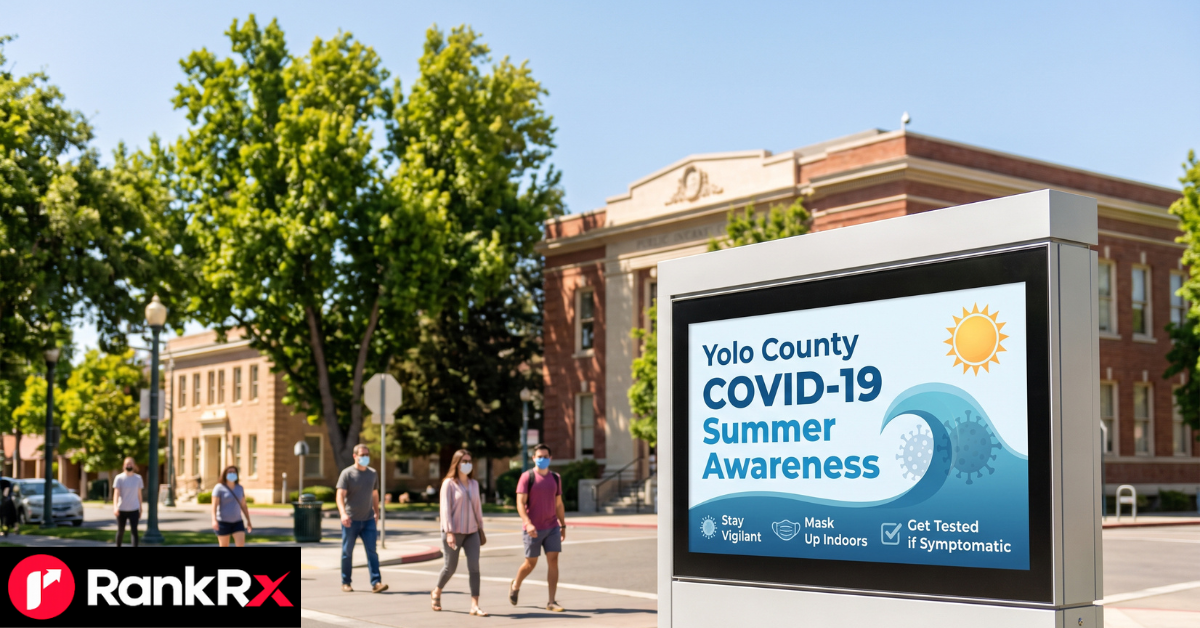

If you live in Davis, Woodland, or West Sacramento and you’ve noticed more people coughing at the grocery store lately, you’re not imagining it. The Yolo County COVID summer wave is real, it’s been building since late June, and local health officials have already issued fresh guidance because of it. This isn’t a one-off local story, either it fits a pattern that’s shown up every summer since the pandemic officially ended, and it’s worth understanding rather than panicking about.
This article isn’t medical advice. It’s a plain-English breakdown of what’s happening in Yolo County right now, why COVID keeps returning every summer, what the data actually shows, and what practical steps residents can take based on public health sources, not speculation.
What’s Driving the Yolo County COVID Summer Wave Right Now
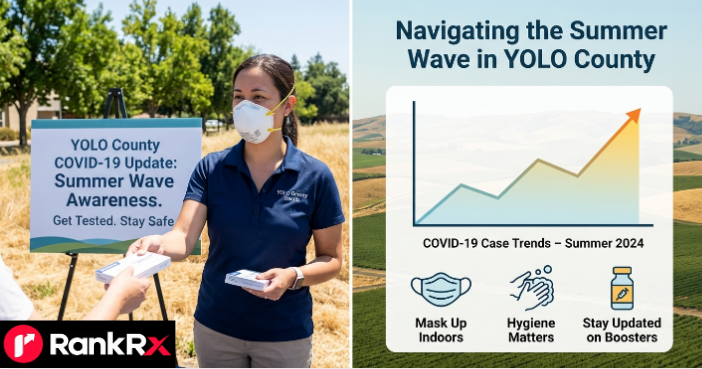
Every summer since 2022, COVID-19 has staged a comeback across California, and Yolo County has become something of a bellwether for it. Local health officer statements from the county have repeatedly opened with some version of “California is experiencing a summer COVID wave” and 2026 is no exception. yolo county covid summer wave.
Here’s the short version of what’s going on:
- Wastewater signals are up. Independent monitoring networks like Stanford’s WastewaterSCAN have reported SARS-CoV-2 concentrations climbing steadily since late June 2026, with August levels running roughly double what they were in July across the country. The West region, which includes California, has consistently shown some of the highest readings. yolo county covid summer wave
- Test positivity is rising too. National test positivity climbed above 3% in mid-August 2026 for the first time since March, and it’s been ticking upward week over week.
- Hospitalizations remain comparatively low. Even as case activity rises, California’s COVID hospitalization rate has dropped sharply compared to prior years — a pattern public health officials attribute to widespread prior immunity from vaccination and past infection. yolo county covid summer wave
- A new variant is in the mix. The FDA has directed vaccine makers to target the XFG lineage (sometimes called “Stratus”) in the 2026–2027 vaccine formula, since it’s currently a dominant circulating strain alongside other Omicron descendants. yolo county covid summer wave
READ MORE: How AI Residency Application Screening Is Transforming Medical Recruitment Strategy
Yolo County’s own wastewater monitoring has flagged high SARS-CoV-2 activity, with Sacramento and West Sacramento sewersheds showing the sharpest increases, while Davis and Woodland have trended from medium toward higher levels. Emergency department visits for fever with cough or sore throat have also been climbing locally, which lines up with the county’s own past summer wave announcements. yolo county covid summer wave
Why COVID Now Behaves Like a Seasonal Virus (With Two Peaks)
One thing that trips people up: unlike flu and RSV, which peak once each winter, COVID-19 has settled into a pattern with two seasonal peaks — one in winter and, increasingly, a second and sometimes larger one in summer. California’s own state health officials have noted that recent summer peaks have actually outpaced winter ones in several years running. yolo county covid summer wave
Why summer? A few working theories, none of them fully proven, include:
- Waning immunity roughly 4–6 months after the prior winter’s infections or vaccinations
- More indoor gatherings during extreme summer heat (air conditioning, crowded venues)
- Increased travel and mixing during vacation season yolo county covid summer wave
- New variants emerging that partially evade existing immunity yolo county covid summer wave
None of this is settled science — virus behavior is genuinely hard to predict, and researchers themselves say this year’s wave started later and more gradually than in 2023 or 2024, which makes the eventual peak harder to forecast.
Yolo County’s Official Response and Guidance
Yolo County Health and Human Services Agency has a consistent playbook for summer waves, and it’s worth knowing so you’re not caught off guard by local headlines. yolo county covid summer wave
When wastewater levels reach “high” in a specific area — West Sacramento has repeatedly been the first to hit that threshold — the county’s health officer has recommended that everyone age 2 and older wear a well-fitted mask indoors in public spaces. When levels sit at “medium,” the recommendation narrows to higher-risk groups: people 65 and older, those with weakened immune systems, people with underlying medical conditions, and anyone who regularly spends time around those groups. yolo county covid summer wave
Importantly, these have consistently been recommendations, not mandates. Yolo County has not reinstated masking requirements during recent summer waves, and there’s no indication that’s changed for 2026.
A notable local development: Yolo County recently transitioned public health leadership, with Dr. Joanna Locke — who previously worked in communicable disease response for Alameda County — succeeding longtime health officer Dr. Aimee Sisson. That kind of leadership change is worth watching, since guidance and communication style can shift somewhat with new leadership, even when the underlying science doesn’t. yolo county covid summer wave
Quick Reference: Yolo County Wastewater Guidance Levels
| Wastewater Level | Who’s Advised to Mask Indoors |
|---|---|
| High | Everyone age 2 and older |
| Medium | People 65+, immunocompromised individuals, those with underlying conditions, and their close contacts |
| Low | No specific masking guidance issued |
This table reflects the general framework the county has applied in recent summer advisories — always check YoloCounty.gov directly for the current status, since wastewater levels shift week to week.
What the Data Actually Shows (And Where It Gets Confusing)
Here’s something that trips up a lot of people trying to follow COVID trends in 2026: two major surveillance systems are currently telling somewhat different stories, and it’s not because one is wrong. yolo county covid summer wave
READ MORE: Healthy Morning Routine Tips for Energy and Focus
The CDC’s own wastewater dashboard has rated national SARS-CoV-2 activity as “very low” for much of August 2026. Meanwhile, WastewaterSCAN — a Stanford-run program using different methodology and a different comparison baseline — has rated the same underlying data as “high,” with concentrations up significantly since July. The CDC’s separate epidemic trend model, which draws on multiple indicators, has estimated that infections were growing or likely growing in nearly every state as of mid-to-late August. yolo county covid summer wave
The practical takeaway: don’t rely on a single dashboard. If you want a fuller picture, cross-reference the CDC’s national wastewater and epidemic trend pages with WastewaterSCAN’s regional data and your local county health department’s own updates.
Key Numbers Worth Knowing
- National COVID-19 test positivity climbed above 3% in the second week of August 2026 — the highest it’s been since March
- WastewaterSCAN reported SARS-CoV-2 concentrations up roughly 106% in August compared to July
- California is one of a small handful of states where the CDC currently rates wastewater activity as moderate-to-high
- Hospitalization rates in California are running well below prior-year summer peaks, even as case activity rises
Experts have generally been cautious about predicting exactly when this wave will crest, though some modeling has pointed to early-to-mid September as a possible peak. That’s an estimate, not a guarantee — waves have surprised forecasters before.
Practical Steps: What Yolo County Residents Can Actually Do
None of this requires a return to 2020-style lockdown thinking. It does call for a few sensible, low-effort precautions if you want to reduce your own risk or protect someone vulnerable in your household.
If you’re at higher risk (65+, immunocompromised, or living with someone who is):
- Consider wearing a well-fitted N95, KN95, or KF94 mask in crowded indoor spaces, especially if local wastewater levels are flagged as high or medium
- Check your vaccination status — updated boosters are typically most protective in the months right after they’re administered
- Keep at-home rapid tests on hand and test early if symptoms appear
- Ask your doctor about antiviral treatment options if you test positive and are in a high-risk group, since early treatment can meaningfully reduce the odds of severe illness
If you’re generally healthy:
- Masking indoors during high-transmission periods is a personal choice, not currently a requirement
- Basic precautions still help — staying home when sick, testing before big gatherings, improving indoor ventilation where possible
- If you haven’t had a COVID vaccine dose in the past year and you have upcoming travel or events, it’s worth a conversation with a pharmacist or doctor about timing
For everyone:
- Check Yolo County’s official COVID-19 updates page before major decisions rather than relying solely on national headlines, since local wastewater data can differ from statewide trends
- Watch for the updated 2026–2027 vaccine formulation, expected to roll out this fall and targeted at currently circulating strains
Common Mistakes to Avoid
- Assuming low CDC “very low” ratings mean there’s no wave. As covered above, the CDC’s baseline comparison method can lag behind faster-moving data sources like WastewaterSCAN. Check more than one source.
- Treating hospitalization data as the only signal that matters. Hospitalizations lag behind case activity by design — a wave can be well underway in the community before hospital numbers move.
- Ignoring wastewater trends because “cases feel normal.” Most people test at home now, if they test at all, so official case counts massively undercount actual spread. Wastewater data exists precisely because it doesn’t depend on people getting tested.
- Waiting for a mandate before taking any precautions. Yolo County has shown no signs of reinstating mandates; guidance has consistently stayed voluntary, so anyone waiting for an official order before masking or testing may be waiting indefinitely.
- Assuming this year’s wave will behave exactly like last year’s. Officials have noted this year’s rise started later and more gradually, which means the shape and peak timing genuinely aren’t settled yet.
Conclusion
The Yolo County COVID summer wave fits a pattern that’s now familiar across California: rising wastewater signals, climbing test positivity, and cautious guidance from local health officials aimed mainly at protecting higher-risk residents — without a return to mandates. Hospitalizations remain comparatively low this year, which is genuinely good news, but the virus is clearly still circulating at meaningful levels heading into September 2026.
READ MORE: Balanced Diet Plan for Daily Energy A Practical Guide
The most useful thing any Yolo County resident can do is stay informed through more than one source — the county’s own health updates, CDC data, and independent wastewater trackers — and make sensible, personal choices about masking, testing, and vaccination based on their own risk level and that of people around them.
FAQs
Is Yolo County currently under a mask mandate because of COVID?
Yolo County’s health officer has issued masking recommendations during summer waves, particularly for West Sacramento and for higher-risk residents countywide, but these have consistently remained voluntary guidance rather than mandates.
Why does COVID surge in summer if it’s a respiratory virus?
COVID-19 has developed a pattern of two seasonal peaks — winter and summer — unlike flu and RSV, which typically peak only in winter. Waning immunity, increased indoor gatherings during hot weather, and new variants are all thought to contribute, though the exact mechanism isn’t fully settled science.
How can I check current COVID wastewater levels in Yolo County?
Yolo County posts updates through its official Health and Human Services Agency press releases, and residents can also check statewide data through the California Department of Public Health’s wastewater surveillance dashboard, alongside CDC and WastewaterSCAN national trackers for broader context.
Are hospitalizations rising along with cases in this summer’s wave?
Not significantly. Reporting through August 2026 shows California’s COVID hospitalization rate running well below prior-year summer peaks, even as wastewater signals and test positivity climb — a pattern attributed to broad prior immunity from vaccination and past infection.
Should healthy people mask indoors right now?
That’s a personal decision. Yolo County’s guidance specifically calls for masking indoors when local wastewater levels are high, and recommends it for higher-risk individuals at medium levels; for generally healthy people, it remains a matter of personal risk tolerance rather than official requirement.
When will this summer’s COVID wave in Yolo County peak?
It’s genuinely uncertain. Some public health modeling has pointed to early-to-mid September 2026 as a possible peak, but officials have cautioned that this year’s wave started later and more gradually than in prior years, making the timing harder to predict with confidence.
For more updates visit: rankrx.co.uk