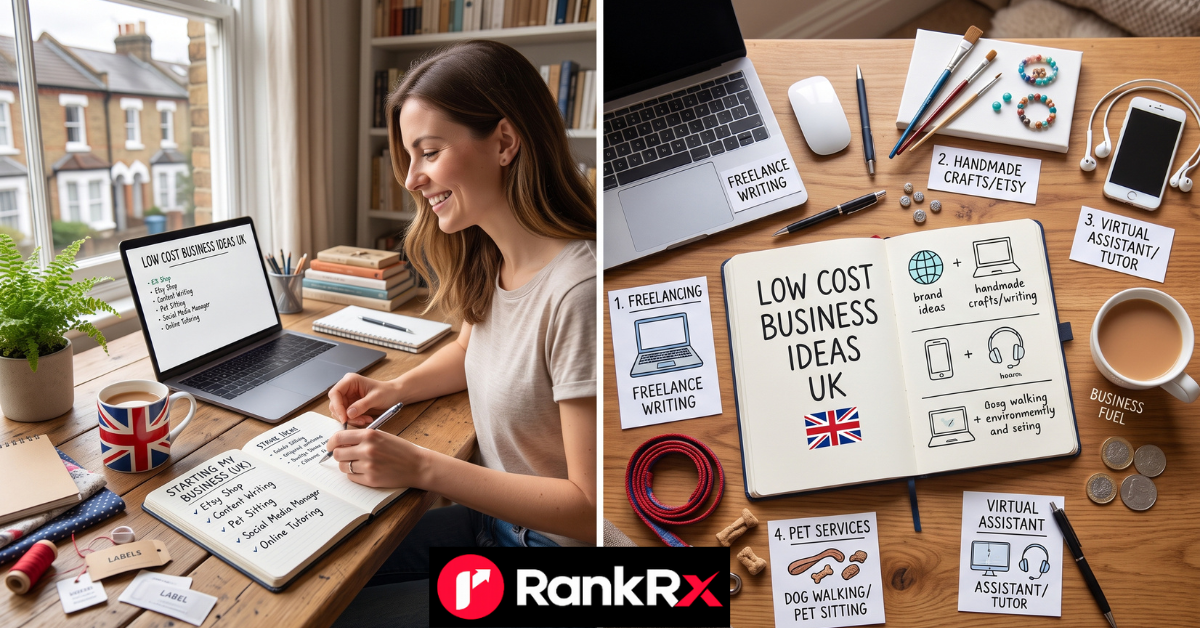

You don’t need a business loan, an office, or a five-figure war chest to start trading in the UK. Most of the businesses that actually get off the ground in 2026 start on a laptop, a phone, and whatever skill the founder already has.
That’s the honest starting point for this guide. Not “quit your job tomorrow” energy just a practical look at low cost business ideas UK founders are genuinely using right now, what they cost to start, what they take to run, and where people usually trip up.
We’ll cover service-based ideas, online and e-commerce options, local trades, and digital products, plus the boring-but-necessary admin: registering with HMRC, deciding between sole trader and limited company status, and getting found by customers once you’ve launched.
What “Low Cost” Actually Means
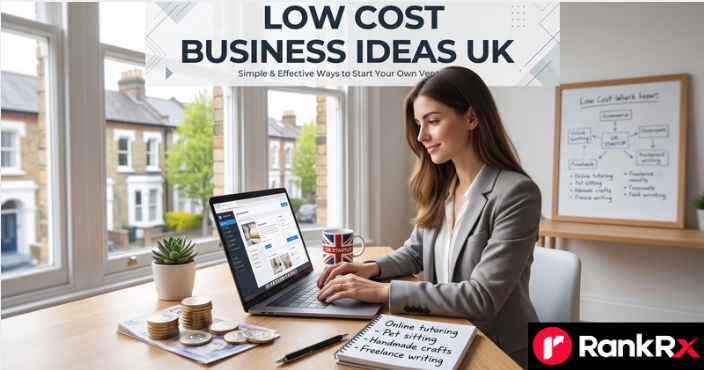
“Low cost” gets thrown around loosely in business content, so it’s worth being specific. We’re splitting ideas into three rough budget bands: low cost business ideas UK.
| Budget band | What it typically covers | Best suited to |
|---|---|---|
| Under £100 | Free tools, a domain name, basic listing fees | Testing an idea before committing money |
| £100–£500 | Software subscriptions, starter stock, basic insurance, simple website | Service businesses, resellers, freelancers |
| £500–£2,000 | Better equipment, proper branding, small stock runs, van signage | Trades, product-based businesses, anything needing kit |
None of these figures are guarantees your actual costs depend on your trade, your area, and how fast you want to grow. A mobile dog groomer and a freelance copywriter have very different starting points even though both count as “low cost.” low cost business ideas UK.
How to Pick the Right Idea for You
Before jumping into the list, it helps to filter ideas against three questions:
- Do you already have the skill, or do you need to learn it first? Ideas built on existing skills (a trade, a language, design experience) get to income faster than ideas requiring months of upskilling.
- How much time can you give it before it needs to pay you back? A service business can bring in money within weeks. A content or product brand usually takes longer to build an audience.
- Are you selling your time, or building something that can run without you? Freelance and trade work is reliable but caps out at the hours in your day. Digital products, e-commerce, and content can scale past that ceiling, but usually take longer to get moving. low cost business ideas UK.
There’s no universally “best” answer here — it depends on your runway, your risk tolerance, and what you’re actually good at. low cost business ideas UK.
READ MORE: How to Save Money on Online Shopping in the UK A Practical 2026 Guide
Service-Based Businesses (Sell Your Skills)
These are the fastest ideas to get paying clients, because you’re not waiting on stock, an audience, or a product to be finished — you’re selling something you can already do.
1. Freelance Copywriting or Content Writing
If you can write clearly, there’s steady demand from small businesses that need website copy, product descriptions, email newsletters, or blog content but can’t justify a full-time hire. Startup cost is close to zero: a laptop, a portfolio (even a handful of sample pieces), and a profile on a platform like LinkedIn or a freelance marketplace.
The honest limitation: the freelance writing market is crowded, and clients increasingly expect writers to edit and fact-check AI-assisted drafts rather than write everything from scratch. Writers who position themselves around editing, strategy, or a specific niche (finance, legal, technical) tend to command better rates than generalists.
2. Virtual Assistant (VA) Services
Admin, inbox management, diary scheduling, and basic bookkeeping support are all things small business owners outsource once they’re too busy to do it themselves. VA work needs almost no startup capital — most of your “kit” is software you likely already have, plus maybe a project management tool subscription.
Specialising helps here too. A VA who says “I help therapists with admin” will usually find work faster than one who says “I do general admin for anyone.” low cost business ideas UK.
3. Social Media Management
Small brands know they need a social presence but often don’t have the time or eye for it. If you understand how to plan content, write captions, and read basic engagement data, this is a repeatable, retainer-based service. Free tools (Canva, native scheduling tools on most platforms) cover the basics; paid scheduling software becomes worth it once you have a few clients. low cost business ideas UK.
4. Bookkeeping and Admin Support
Every business, however small, needs its numbers kept straight. Basic bookkeeping — reconciling transactions, tracking expenses, preparing figures for an accountant — is a genuinely low-cost service to start, especially if you already have some finance or admin background. Cloud accounting software subscriptions are the main ongoing cost, and many offer free trials or partner pricing for people setting up as a bookkeeper.
Note: full accountancy and tax advice usually requires qualifications and, for some services, regulatory registration — bookkeeping support for day-to-day records is a different, more accessible starting point.
5. Graphic Design or Branding
Logos, social media templates, packaging, and basic brand kits are all things small businesses need and can’t always afford an agency for. Startup costs are mostly software (design tools have monthly plans, and some offer free tiers that are enough to start with) plus the time to build a portfolio, which you can do with sample or spec projects at first.
6. Translation and Language Services
If you’re fluent in a second language, translation and localisation work — documents, websites, marketing copy — is a straightforward service business with low overheads. It suits people who already have the language skill; building it from scratch specifically to start a business is a longer road. low cost business ideas UK.
7. Tutoring (In-Person or Online)
Academic tutoring, exam prep, and skills coaching (music, languages, coding) remain consistently in demand across the UK. Online tutoring removes the need for travel and lets you work with students anywhere, using a laptop and a video call tool. In-person local tutoring can start with just word-of-mouth and a simple listing on a tutoring platform.
8. Mobile Trade Services (Cleaning, Handyman Work, Gardening, Dog Walking)
Practical, hands-on services — house cleaning, small home repairs, gardening, pet care — have low technology overheads but do usually need basic equipment, transport, and in many cases liability insurance, which should be budgeted for from day one rather than treated as optional. Local reputation and referrals tend to matter more than a polished website in the early stages. low cost business ideas UK.
Online and E-Commerce Business Ideas
These ideas trade a bit more setup time for the ability to sell beyond your local area.
9. Print-on-Demand or Dropshipping
Print-on-demand and dropshipping let you sell physical products — t-shirts, mugs, phone cases, or sourced goods — without holding inventory yourself; a supplier prints, packs, and ships on your behalf. It’s genuinely low cost to start, since you’re not buying stock upfront, but margins are typically thinner than businesses that hold their own stock, and competition on popular platforms is heavy. Treat “low investment” as accurate but not the same as “low effort” — product research, design quality, and marketing spend still determine whether it actually sells.
10. Reselling and Sourcing
Buying discounted, secondhand, or surplus stock — clothing, electronics, homeware — and reselling it on marketplaces like eBay or Vinted is one of the oldest low-cost business models, and it still works because the barrier to entry is genuinely small: you can start with whatever you can afford to buy back, even under £100. The skill that separates a profitable reseller from a hobbyist is sourcing: knowing what sells, what condition standards buyers expect, and how to price competitively after fees. low cost business ideas UK.
11. Digital Products (Templates, Printables, Courses, E-books)
Once built, a digital product — a planner, a Notion template, a short course, a design asset pack — can sell repeatedly without additional production cost. This is one of the better examples of a business that can eventually run with less of your ongoing time, but the trade-off is upfront effort: you’re building the product and, usually, an audience to sell it to, before any money comes in. It rarely works as a “quick win” despite how it’s sometimes marketed.
12. Handmade Goods (Etsy and Marketplace Selling)
Candles, jewellery, ceramics, greetings cards, and other handmade goods have a natural home on marketplaces built for independent sellers. Startup costs depend heavily on materials, but many people start by testing a small batch before committing to larger production runs. Photography and listing quality make a bigger difference to sales than most new sellers expect. low cost business ideas UK.
13. Affiliate Content or Niche Review Sites
Building a small website or content channel around a specific topic and earning commission by recommending relevant products is low-cost to start (mainly hosting and a domain) but slow to earn from, since it depends on building organic traffic or an audience first. It suits people willing to treat it as a medium-term project rather than immediate income, and it works best when built around genuine expertise rather than generic “best of” content.
14. AI-Assisted Content or Editing Services
There’s a growing market for people who combine AI tools with human judgement — editing AI-generated drafts for accuracy and tone, building AI-assisted workflows for small businesses, or offering “AI plus human polish” content services. This is a newer category, and what counts as good practice here is still evolving, so it’s worth treating specific tactics as things to keep reviewing rather than settled methods. low cost business ideas UK.
15. Online Coaching or Consulting
If you have real, demonstrable experience in an area — fitness, career change, small business marketing, productivity — coaching and consulting can be started with just a video call tool and a booking page. What makes this work is credibility: testimonials, a clear track record, or visible expertise, not just enthusiasm for the topic.
Local and Trade-Based Ideas
16. Mobile Car Valeting or Detailing
Low equipment cost to start (cleaning supplies, a pressure washer, transport), strong local demand, and repeat customers if the work is good. Insurance and public liability cover are worth budgeting for given you’re working on other people’s property. low cost business ideas UK.
17. Mobile Hairdressing or Beauty Services
Qualified hairdressers and beauty therapists can go mobile with a kit bag rather than renting a salon chair, cutting overheads dramatically. This route generally assumes you already hold the relevant qualification — it’s a low-cost way to go independent, not a way to skip training. low cost business ideas UK.
18. Cleaning Services (Domestic or End-of-Tenancy)
Domestic and end-of-tenancy cleaning has steady, recurring demand in most UK towns and cities. Startup costs are mainly cleaning supplies and, as you grow, transport between jobs. Many cleaners start solo and only take on staff once demand is consistent. low cost business ideas UK.
19. Personal Training or Fitness Coaching
Outdoor or park-based personal training needs minimal equipment compared to running a gym, and online coaching (programming, check-ins, video calls) removes location limits entirely. A recognised fitness qualification is generally expected by clients and, in many cases, by insurers. low cost business ideas UK.
20. Photography (Events, Property, Product)
A decent camera is the main upfront cost, but many people start with equipment they already own and reinvest early earnings into better kit. Property photography for estate agents and product photography for small online sellers are both steady, less saturated niches compared to general portrait photography.
Digital and Skills-Based Ideas
21. Web Design for Small Businesses
Plenty of local businesses still don’t have a proper website, or have one that hasn’t been updated in years. If you can build clean, functional sites — using low-cost or free website builders rather than custom code — this is a repeatable service with clients who often need ongoing maintenance too, which turns one-off projects into recurring income.
22. SEO and Local Search Help for Small Businesses
Many small business owners know they should “do SEO” but have no idea where to start. Helping them fix the basics — a properly set up Google Business Profile, clear website structure, accurate local listings — is a genuinely low-cost service to offer, since the core tools involved are often free or low-cost. The honest caveat: SEO results take time and are never guaranteed, so this works best framed as ongoing improvement, not a quick fix.
23. Podcast or Video Editing
As more small brands and creators start podcasts and video content, editing is an outsourced task with real demand. Editing software has genuinely usable free tiers, so you can start taking on small jobs before investing in premium tools. low cost business ideas UK.
24. Virtual Event Planning
Webinars, online courses, and virtual workshops all need someone to handle logistics — scheduling, tech setup, registrations, follow-ups. This suits organised people who don’t need to hold any inventory or rent any venue to get started. low cost business ideas UK.
25. Subscription Box Curation (Small Scale)
A niche subscription box — for a hobby, a diet, a local product category — can start small with a handful of subscribers before scaling. It’s more capital-intensive than most ideas on this list because you’re holding stock, so it sits at the higher end of the “low cost” range rather than the free end. low cost business ideas UK.
READ MORE: Best Business Ideas UK 2026 What’s Actually Worth Starting
Comparing the Options at a Glance
| Idea type | Typical startup cost | Time to first income | Main risk |
|---|---|---|---|
| Freelance services (writing, VA, design) | Under £100–£300 | Weeks | Inconsistent client flow early on |
| Local trades (cleaning, mobile beauty, handyman) | £100–£1,000+ | Weeks | Equipment and insurance costs |
| E-commerce (dropshipping, reselling, handmade) | £50–£1,000 | Weeks to months | Thin margins, platform fees |
| Digital products and content | Under £200 | Months | Slow to build an audience |
| Consulting and coaching | Under £100 | Weeks to months | Needs credible track record to sell |
Getting the Legal and Admin Basics Right
This is the part people rush past, and it’s where a lot of avoidable mistakes happen.
Sole trader vs limited company. Most people starting a low-cost business begin as a sole trader. It’s the simplest structure, there’s no Companies House registration involved, and you keep the profits after tax.
You do need to register for Self Assessment with HMRC once your self-employed income goes over £1,000 in a tax year. The registration deadline is 5 October following the end of the tax year in which you started trading.
A limited company involves more admin — registering with Companies House, filing annual accounts — and currently costs around £100 to incorporate online. It can offer liability protection and, depending on your income level, tax advantages. That’s worth discussing with an accountant rather than assuming either structure is automatically “better.
Insurance. If you’re going into people’s homes, handling their property, or giving advice that could be acted on, public liability or professional indemnity insurance is worth budgeting for from the start, not adding later once something’s gone wrong. low cost business ideas UK.
A separate business bank account. Not always legally required for sole traders, but it makes bookkeeping and tax time considerably less painful, and most providers now offer free or low-cost accounts for small businesses.
Record keeping. Whatever structure you choose, keep records of income and expenses from day one. It’s far easier to stay on top of this from the start than to reconstruct it later. low cost business ideas UK.
None of this is exciting, but getting it right early avoids penalties, insurance gaps, and messy accounts down the line — and none of it should meaningfully affect your total startup cost if you plan for it. low cost business ideas UK.
Common Mistakes to Avoid
- Spending on branding before validating the idea. A logo and a fancy website won’t fix a business idea nobody wants to pay for. Get a few real customers first.
- Skipping insurance to save money. One claim can cost far more than years of premiums would have.
- Underpricing to win early clients. It’s tempting, but underpriced work attracts price-sensitive clients and makes raising rates later harder. low cost business ideas UK.
- Ignoring tax and admin deadlines. Late registration and late filing penalties are avoidable and eat into thin early margins. low cost business ideas UK.
- Trying to do everything at once. Most low-cost businesses succeed by doing one thing well before expanding into extra services or products. low cost business ideas UK.
- Assuming a platform (marketplace, social app) will always send you customers for free. Algorithms and policies change; businesses that also build their own website and mailing list have more control over demand.
Getting Found Once You’ve Launched
Starting is only half the job — you also need customers to find you. For most of the ideas above, that means getting the basics of visibility right before chasing anything advanced:
- A simple, clear website — even a single page explaining what you do and how to contact you — gives you somewhere to send people and something Google can index.
- A properly completed Google Business Profile matters enormously for local, trade-based businesses; it’s often the single highest-return thing you can set up for free.
- Word of mouth and reviews still carry more weight for local services than most paid advertising, especially in the first few months.
- For content or product-based ideas, building an audience (a mailing list, a social following) takes longer than most guides admit, but it’s more durable than relying on one platform’s algorithm.
This is genuinely where a bit of SEO and content strategy earns its keep — not as a magic traffic switch, but as the slow, compounding work of making sure the right people can actually find your low-cost business once it exists.
Final Thoughts
There’s no single “best” answer among these low cost business ideas UK founders are using in 2026 — the right one depends on your skills, your available time, and how much risk you’re comfortable carrying while you test it. What most of the ideas above have in common is that they let you start small, prove the idea works, and reinvest as you go, rather than betting everything upfront.
READ MORE: 10 Best Business Ideas in the UK for 2026 (High-Margin & Low Overhead)
Results vary by niche, location, and competition, and nothing here is a guaranteed path to income — treat this as a starting map, not a promise.
FAQs
What is the cheapest business to start in the UK?
Service-based businesses that rely on a skill you already have — freelance writing, virtual assistant work, tutoring, or social media management — tend to be the cheapest to start, since the main cost is your time rather than equipment or stock.
Do I need to register as a business if I’m just starting small?
If you’re a sole trader earning more than £1,000 from self-employment in a tax year, you need to register for Self Assessment with HMRC, even if you’re not registering with Companies House.
Can I start a business in the UK with no money?
It’s possible with skill-based services that need only a laptop and internet connection, but “no money” rarely means zero ongoing costs — most businesses still need at least a small budget for insurance, software, or basic marketing once they grow past the first few clients.
Is dropshipping still worth it in 2026?
It remains a low-cost way to sell physical products without holding stock, but margins are typically thinner than other models and competition is significant, so it suits people willing to invest in product research and marketing rather than expecting a passive income stream.
Should I become a sole trader or set up a limited company?
Most people starting small begin as a sole trader for simplicity; a limited company adds admin and a roughly £100 registration cost but can suit higher earners or those wanting liability protection. It’s worth a conversation with an accountant rather than a default choice.
How long does it take a low-cost business to start making money?
Service-based businesses can bring in income within weeks of finding the first client. Content, product, and audience-based businesses usually take months to build momentum, since they depend on visibility and trust building over time.
For more updates visit: rankrx.co.uk