

If money is the only thing standing between you and a UK degree, you’re not alone and you have more options than most guides let on. Tuition for international students in the UK now runs anywhere from around £10,000 to £38,000 a year, before you’ve even paid for rent, food, or the visa itself. That gap is exactly why international scholarships to study in the UK exist, and why it pays to understand how they actually work before you start applying.
This isn’t a list of “50 scholarships you’ll never win.” It’s a practical breakdown of who funds UK study for international students, how competitive each route really is, what the money actually covers, and the mistakes that quietly sink strong applications every year.
Why the UK Is Still a Top Destination And Why Funding Matters
The UK remains one of the most popular study-abroad destinations in the world, sitting just behind the United States. Higher Education Statistics Agency (HESA) figures put the number of international students in the UK at roughly 697,000 in the 2024/25 academic year. India has consistently been the largest single source of students, with well over 100,000 study visas granted to Indian nationals in a recent 12-month period, followed closely by China and a growing group of students from Nigeria, Pakistan, and across Southeast Asia. international scholarships to study in the uk.
That popularity comes at a cost. Between tuition, accommodation, and the UK’s student visa financial requirements (more on those below), a one-year master’s in a city like London can easily cost £35,000–£45,000 all in. Scholarships don’t just make that more affordable for a lot of students, they’re the difference between studying in the UK and not studying there at all. international scholarships to study in the uk.
The Main Types of UK Scholarships for International Students
Before diving into specific programmes, it helps to understand the categories, because the application process (and your odds) differ a lot between them. international scholarships to study in the uk.
- Government-funded scholarships — Chevening, Commonwealth Scholarships, and GREAT Scholarships. Funded by the UK government, often the most prestigious and the most competitive.
- University-funded scholarships — offered directly by individual institutions, ranging from small tuition discounts to fully funded packages. Usually the most realistic option for the average applicant.
- Subject-specific scholarships — targeted at fields like STEM, medicine, law, or the creative arts, sometimes with a focus on increasing diversity (for example, women in engineering or computer science).
- Country-specific scholarships — aimed at applicants from a particular nation or region, often tied to bilateral education partnerships. international scholarships to study in the uk.
- Private and charitable scholarships — funded by foundations, companies, or alumni groups, usually smaller but with less competition than the flagship government awards.
Funding levels vary enormously. Some scholarships cover a token £2,000 toward fees. Others — like Chevening or the Commonwealth Scholarships — are genuinely fully funded, covering tuition, a monthly stipend, and flights. Knowing which category you’re applying to helps you set realistic expectations from the start.
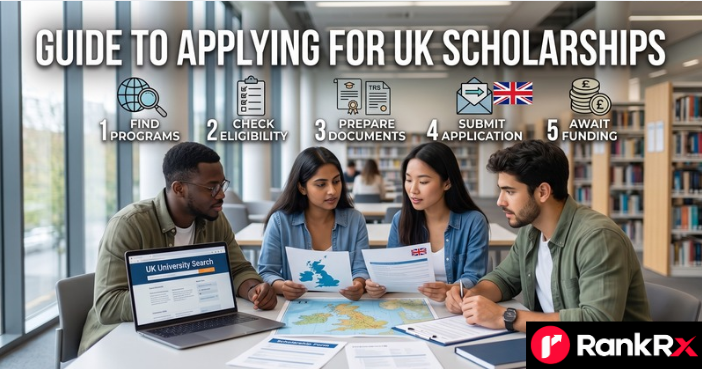
How the Application Timeline Usually Works
One thing that catches a lot of applicants off guard: the scholarship deadline is almost never the same as the university application deadline, and it’s rarely close to the course start date either.
A typical timeline for a September intake looks something like this: international scholarships to study in the uk.
- 10–12 months before the course starts — flagship government scholarships (Chevening, Commonwealth) open applications, usually in August–October.
- 8–10 months before — many scholarship deadlines close, well before you’d normally think about applying to university at all.
- 6–9 months before — university admissions decisions and university-specific scholarship offers typically arrive.
- 3–5 months before — CAS (Confirmation of Acceptance for Studies) is issued once you’ve accepted an offer and met any conditions.
- 1–3 months before — Student visa application, including proving maintenance funds and paying the Immigration Health Surcharge.
The practical takeaway is simple: if you’re only starting to look at scholarships once you have a university offer in hand, you’ve likely already missed the biggest government-funded schemes for that intake. Building a rough calendar the year before you plan to study is one of the most underrated pieces of scholarship advice out there.
Flagship Government-Funded Scholarships
These are the programmes most people mean when they search for international scholarships to study in the UK. They’re prestigious, well-funded, and — it has to be said — genuinely hard to get.
Chevening Scholarships
Chevening is the UK government’s global scholarship programme, aimed at emerging leaders who want to complete a one-year master’s degree in any subject, at any UK university. It typically covers tuition, a monthly living stipend, return flights, and additional grants for things like visa costs. Applications for the following year’s intake usually open in August, and eligibility is built around leadership potential and professional experience rather than academic scores alone — most successful applicants have a few years of relevant work behind them.
Commonwealth Scholarships
Run by the Commonwealth Scholarship Commission (CSC) and funded through the UK’s Foreign, Commonwealth & Development Office, this scheme is specifically for citizens of eligible Commonwealth countries — a list of more than 50 nations across Africa, Asia, the Caribbean, and the Pacific. There are several strands: Commonwealth Master’s Scholarships and PhD Scholarships (for candidates from lower-income Commonwealth countries), Shared Scholarships, Split-site Scholarships, and Professional Fellowships. Requirements typically include an upper-second-class (2:1) degree or above, and — importantly — a case for how your study will benefit development back home. Applications generally close in October for the following September’s intake, so this is one to plan a full year in advance for. international scholarships to study in the uk.
GREAT Scholarships
A joint initiative between the UK government’s GREAT Britain Campaign, the British Council, and more than 60 UK universities, GREAT Scholarships offer a minimum of £10,000 toward tuition for one-year postgraduate taught programmes. It’s a partial award, not a full ride, but it’s stackable with other funding and comes with a lighter application process since each participating university runs its own selection. The programme is limited to applicants from a specific list of eligible countries — which has included Bangladesh, China, Egypt, Ghana, India, Indonesia, Kenya, Malaysia, Mexico, Nigeria, Pakistan, Thailand, and Vietnam in recent cycles — though the exact list and number of scholarships shift slightly year to year, so it’s worth checking the current cohort directly.
Rhodes Scholarship
One of the oldest and most selective postgraduate awards in the world, the Rhodes Scholarship funds full-time study at the University of Oxford. It’s merit-based and highly competitive, built around identifying future public-spirited leaders rather than simply the strongest exam results. international scholarships to study in the uk.
University-Funded and Subject-Specific Scholarships
If the government schemes feel out of reach, don’t skip this section — this is where most successful international students actually get funded. international scholarships to study in the uk.
Nearly every major UK university runs its own scholarship programmes for international applicants, and the range is wide: international scholarships to study in the uk.
- Gates Cambridge Scholarship — for postgraduate study at the University of Cambridge, covering tuition, a stipend (historically around £17,500 a year), and health insurance.
- Merit-based entry scholarships — many universities automatically consider international applicants for awards worth £2,000–£10,000 based on grades alone, no separate application needed.
- STEM and women-in-tech scholarships — a growing number of universities offer dedicated funding for international women pursuing engineering, computer science, or data-related degrees.
- Regional partnership scholarships — schemes like Global Wales Postgraduate Scholarships, which support students from specific countries studying in Welsh universities. international scholarships to study in the uk.
- Hardship and bursary funds — smaller, need-based grants for students already enrolled who run into unexpected financial difficulty. international scholarships to study in the uk.
The honest advice here: check the international scholarships page on the website of every university you’re applying to, not just the big-name national schemes. A £5,000 automatic merit award from your chosen university is often far easier to get — and just as useful — as a long-shot application to a globally competitive programme.
Country-Specific and Private Scholarships Worth Checking
Beyond the big national and university schemes, a lot of funding gets overlooked simply because it’s harder to find through a general search. international scholarships to study in the uk.
- Bilateral education partnerships. Some UK regions run dedicated schemes for students from particular countries — Global Wales Postgraduate Scholarships, for example, target applicants from Vietnam, India, the US, and EU countries studying in Welsh universities specifically. international scholarships to study in the uk.
- Professional and industry bodies. Organisations tied to specific careers (hospitality, aviation, engineering institutes, arts councils) sometimes fund postgraduate study for promising international candidates in their field.
- Alumni and foundation-backed awards. Some UK universities have scholarships funded by wealthy alumni or charitable foundations that are only advertised on the department’s own webpage, not the central scholarships portal — another reason to dig into each faculty site directly. international scholarships to study in the uk.
- Employer or government sponsorship from your home country. Several governments fund their own citizens to study abroad, separate from anything the UK offers. It’s worth checking your own ministry of education or national scholarship board alongside UK-based options. international scholarships to study in the uk.
- Hardship and continuation funds. These aren’t for new applicants, but they’re worth knowing about if your financial situation changes mid-course — most universities have some form of emergency support fund for enrolled international students. international scholarships to study in the uk.
None of these will show up on the front page of a “top 10 UK scholarships” list, which is exactly why they tend to be less competitive than the schemes everyone already knows about. international scholarships to study in the uk.
Comparing the Major Scholarship Routes
| Scholarship | Funded By | Level | Typical Coverage | Competitiveness |
|---|---|---|---|---|
| Chevening | UK Government (FCDO) | Master’s (1 year) | Full tuition, stipend, flights | Very high |
| Commonwealth Scholarships | UK Government / CSC | Master’s & PhD | Full tuition, stipend, flights | Very high |
| GREAT Scholarships | UK Government / British Council | Postgraduate (1 year) | £10,000+ toward tuition | High |
| Rhodes Scholarship | Rhodes Trust | Postgraduate (Oxford) | Full tuition, stipend | Extremely high |
| Gates Cambridge | Gates Cambridge Trust | Postgraduate (Cambridge) | Full tuition, stipend, health cover | Extremely high |
| University merit awards | Individual universities | Undergrad & Postgrad | £2,000–£10,000 (partial) | Moderate |
| GREAT/regional & bursaries | Universities, charities, regional bodies | Varies | Partial, need-based | Low to moderate |
Treat this table as a starting point, not a shortcut — always confirm current figures and country eligibility on the scholarship’s official page before you apply, since amounts and eligible countries do shift between intakes.
What a Scholarship Usually Doesn’t Cover — And Why the Visa Rules Still Matter
This is where a lot of applicants get caught out. Even a generous scholarship doesn’t always mean you’re financially covered for your Student visa application. The UK Home Office sets its own separate financial requirement, known as the maintenance funds rule, and you need to be able to prove it regardless of how your scholarship is structured.
As of 2026, the general requirement is: international scholarships to study in the uk.
- £1,529 per month if studying in London (capped at 9 months)
- £1,171 per month if studying outside London (capped at 9 months)
- Plus any tuition fees not already paid or confirmed on your Confirmation of Acceptance for Studies (CAS)
Funds generally need to have been held for 28 consecutive days before you apply, and the bank statement must be recent. If your scholarship letter explicitly confirms your sponsor is covering fees and living costs, that can sometimes satisfy the requirement directly — but the rules are strict about wording, so it’s worth double-checking with your university’s international student office rather than assuming your award letter is automatically enough.
A few other costs that scholarships don’t always include:
- The Immigration Health Surcharge (paid upfront as part of the visa application)
- The visa application fee itself
- Dependants’ costs, if you’re bringing family with you
- Travel and settling-in costs beyond the flights some scholarships fund
None of this is meant to discourage you — it’s meant to stop you from being blindsided by a visa refusal after you’ve already won a scholarship, which happens more often than it should.
How to Actually Improve Your Chances
There’s no formula that guarantees a scholarship — anyone who tells you otherwise is selling something. But there are patterns that consistently separate strong applications from weak ones.
- Start early. Chevening and Commonwealth Scholarships both open applications roughly a year before the course starts. Missing that window means waiting another full cycle.
- Match the scholarship’s actual purpose. Chevening wants future leaders; Commonwealth Scholarships want a clear development impact back home. A generic personal statement rarely wins either.
- Apply to more than one route. Combining a partial university scholarship with a smaller external grant is a realistic strategy for most students — you don’t need to win the “big one” to make the UK affordable.
- Get your references organised early. Strong, specific references from people who know your work well matter more than references from senior people who barely know you.
- Budget for the visa stage separately. Confirm exactly what your scholarship letter will state about fees and maintenance, and check it against the current Home Office figures before you rely on it.
Common Mistakes to Avoid
- Applying to only one scholarship and treating it as your only plan. Competitive schemes have low acceptance rates even for strong candidates — a backup plan isn’t optional.
- Assuming “fully funded” always means the same thing. Some awards cover tuition only; others include living costs and flights. Read the fine print before you count on a figure.
- Missing country-eligibility details. GREAT Scholarships and Commonwealth Scholarships both restrict eligibility to specific countries that can change between cycles — don’t assume last year’s list still applies.
- Leaving the maintenance funds requirement until after admission. Visa refusals over financial documentation are common and largely avoidable with early planning.
- Ignoring university-level scholarships in favour of only the famous ones. These are often less competitive and just as valuable for your actual budget.
- Submitting a generic personal statement across multiple applications. Selection panels can tell, and it’s one of the most cited reasons for rejection.
Key Takeaways
- The UK remains one of the world’s top study destinations, but tuition and living costs make funding a genuine priority for most international applicants.
- Government-funded routes like Chevening, Commonwealth Scholarships, and GREAT Scholarships are prestigious but highly competitive — apply roughly a year ahead.
- University-specific and subject-specific scholarships are less competitive and worth checking for every institution on your list.
- A scholarship doesn’t automatically satisfy the UK Student visa’s separate maintenance funds requirement — confirm this with your university before applying for your visa.
- Applying broadly, starting early, and tailoring each application to the scholarship’s actual purpose consistently beats chasing a single “dream” award.
Final Word
International scholarships to study in the UK are real, well-funded, and genuinely life-changing for the students who win them but they reward preparation, not luck. Start with your university’s own scholarship page, layer in one or two government or subject-specific applications, and treat the visa’s financial requirements as a separate project from day one. That combination gives you a realistic shot, without the overpromising that a lot of scholarship sites lean on.
FAQs
Are there fully funded scholarships for undergraduate study in the UK, or only postgraduate?
Most of the flagship UK-government scholarships (Chevening, Commonwealth Master’s/PhD, GREAT) are postgraduate-only. Fully funded undergraduate scholarships exist but are rarer and usually come from individual universities or country-specific programmes rather than national schemes.
Can I apply for more than one UK scholarship at the same time?
Yes, and it’s generally a smart strategy. Just check each programme’s rules — some, like GREAT Scholarships, let you apply to several participating universities but only accept one final offer.
Do scholarships cover the UK student visa costs?
Not usually in full. Most scholarships fund tuition and sometimes a living stipend, but visa application fees and the Immigration Health Surcharge are often separate costs you’ll need to budget for yourself, unless your specific award states otherwise.
How early should I start applying for UK scholarships?
For the major government schemes, at least 12 months before your intended start date. University-specific scholarships often have later deadlines, sometimes tied to your admission offer, so check each one individually.
What GPA or grades do I need for a UK scholarship?
It varies by scheme. Many postgraduate government scholarships expect at least an upper-second-class (2:1) UK-equivalent degree, but leadership experience, references, and a strong personal statement often matter as much as grades — particularly for Chevening.
Is IELTS or another English test required alongside a scholarship application?
Most UK universities require proof of English proficiency for admission regardless of scholarship status, so yes — you’ll typically need this sorted before or alongside your scholarship application, not after.
For more updates visit: rankrx.co.uk