
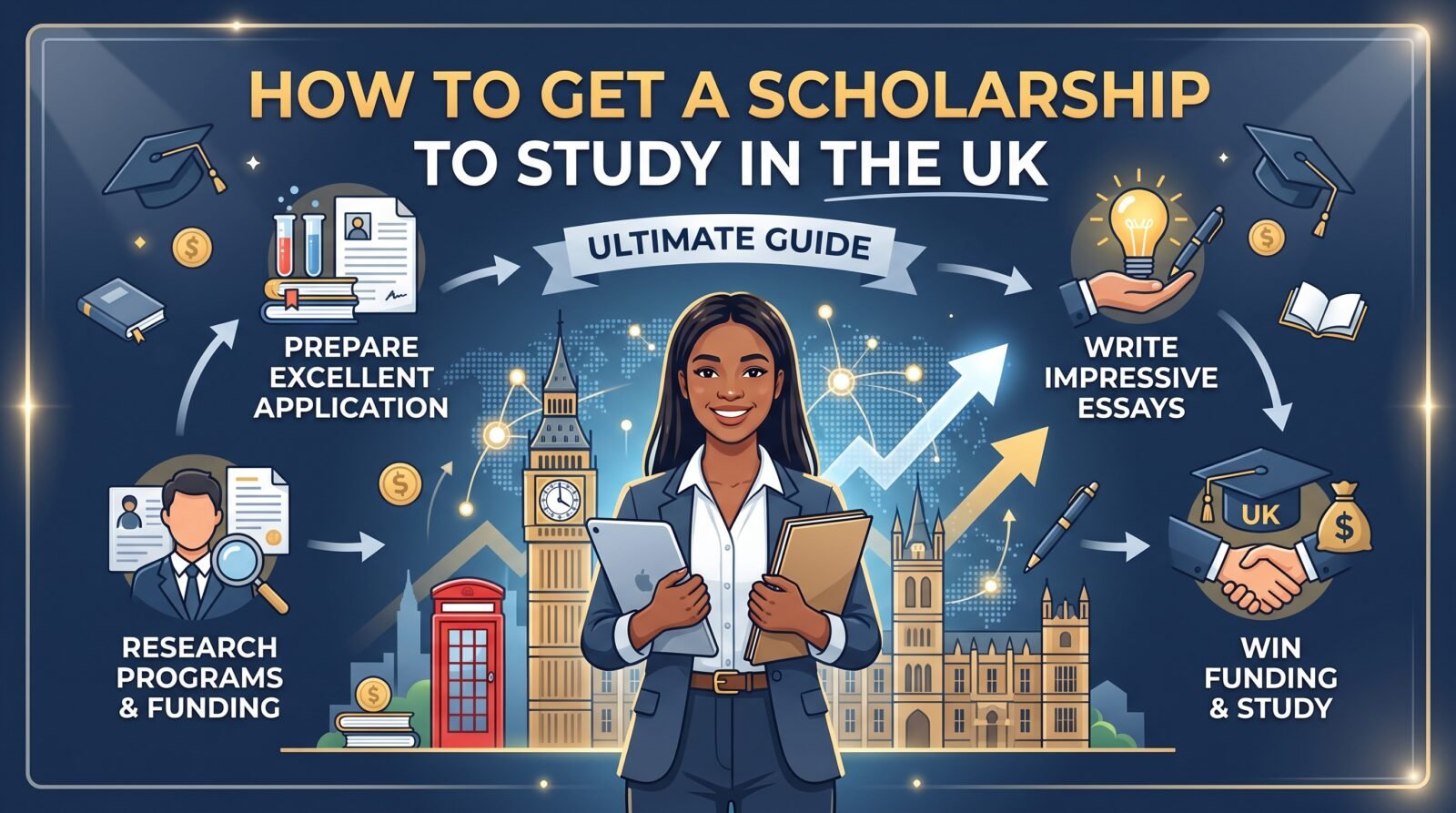

Funding is usually the first thing that stops people from even applying to a UK university. Tuition for international students often runs between £15,000 and £38,000 a year, and living costs add another £12,000 to £18,000 on top. That’s a real number, not a small one so it makes sense that “how to get a scholarship to study in the UK” is one of the most searched questions among prospective international students.
The good news: the UK has one of the richest scholarship ecosystems in the world. Government-funded awards, university-specific bursaries, and subject-based grants exist for almost every level of study. The catch is that most of them are competitive, deadline-driven, and easy to miss if you don’t know where to look. how to get a scholarship to study in the uk.
This guide breaks down the main scholarship routes, how to actually qualify, and the mistakes that knock out otherwise strong applicants.
Who This Guide Is For
This is written for: how to get a scholarship to study in the uk.
- Undergraduate and postgraduate applicants researching funding before choosing a UK university
- Students from Commonwealth or developing countries looking at government-backed awards
- Parents and school counsellors helping students plan applications
- Anyone comparing scholarship options across multiple UK universities
Types of UK Scholarships You Can Apply For
Before applying, it helps to understand that “UK scholarship” isn’t one single thing it’s a mix of programmes with different funders, eligibility rules, and application windows. how to get a scholarship to study in the uk.
1. Government-Funded Scholarships
These are the most prestigious and the most competitive, usually because they’re fully funded (tuition, living costs, and flights). how to get a scholarship to study in the uk.
- Chevening Scholarships – Funded by the UK Foreign, Commonwealth and Development Office, open to applicants from over 160 countries for one-year taught master’s degrees. Chevening funds roughly 1,800 scholars a year and looks for demonstrable leadership potential, not just grades.
- Commonwealth Scholarships – Aimed at students from Commonwealth countries, particularly those from developing economies, for master’s and PhD study. The Commonwealth Scholarship Commission awards around 800 scholarships annually. how to get a scholarship to study in the uk.
- GREAT Scholarships – Run by the British Council with UK universities, targeted at students from a specific set of countries including India, Nigeria, Pakistan, Bangladesh, Kenya, Indonesia, and others. These are one-year fee waivers rather than full living-cost packages. how to get a scholarship to study in the uk.
2. University-Specific Scholarships
Most UK universities run their own award schemes, separate from government funding.
- Clarendon Scholarship (Oxford) and Gates Cambridge Scholarship are among the most well-known, covering full tuition and living costs for postgraduate study.
- Many universities also offer smaller merit-based tuition discounts, faculty-specific bursaries, or country-specific alumni scholarships. These are often less competitive simply because fewer people apply.
3. Subject or Foundation-Based Scholarships
Charities, professional bodies, and industry foundations fund scholarships tied to specific subjects — engineering, public health, journalism, and law are common examples. These rarely show up in general searches, so they’re worth digging for directly on subject association websites. how to get a scholarship to study in the uk.
Scholarship Comparison at a Glance
| Scholarship | Funded By | Study Level | Typical Coverage |
|---|---|---|---|
| Chevening | UK Foreign, Commonwealth and Development Office | Master’s (1 year) | Tuition, living costs, flights |
| Commonwealth Scholarship | UK government / Commonwealth Scholarship Commission | Master’s, PhD | Tuition, living costs, flights |
| GREAT Scholarships | British Council + partner universities | Master’s (1 year) | Tuition fee waiver only |
| Clarendon Fund | University of Oxford | Postgraduate | Tuition, living costs |
| Gates Cambridge | Gates Cambridge Trust | Postgraduate | Tuition, living costs, flights |
| University-specific bursaries | Individual universities | Varies | Varies (partial to full) |
Numbers and eligibility details change from year to year, so always confirm current figures on the scholarship’s official page before applying. how to get a scholarship to study in the uk.
Step-by-Step: How to Actually Apply
Step 1: Get Your University Offer First (for Most Awards)
Most UK scholarships, especially university and GREAT scholarships, require you to already hold an offer of admission before you can apply for funding. Apply to your course early scholarship deadlines are often tighter than course deadlines. how to get a scholarship to study in the uk.
Step 2: Check Eligibility Carefully
Eligibility isn’t just about grades. Government scholarships like Chevening also look at:
- Work experience (often 2+ years is expected)
- Leadership or community involvement
- A clear plan for how you’ll use your degree back home
- English language proficiency scores
Skimming past eligibility criteria is one of the most common ways applicants waste their own time.
Step 3: Build a Strong Personal Statement
This is where most applications are won or lost. Reviewers read hundreds of similar statements, so vague lines like “I have always been passionate about X” don’t stand out. Be specific: what you’ve done, what problem you want to solve, and why studying in the UK specifically helps you do it.
Step 4: Prepare Your Documents Early
Typical requirements include: how to get a scholarship to study in the uk.
- Academic transcripts
- Reference letters
- Proof of English proficiency (IELTS/TOEFL)
- CV or resume
- Personal statement or essay
Reference letters in particular take time give your referees several weeks’ notice, not a few days.
Step 5: Track Deadlines Separately
Chevening applications typically open in August and close in early October. Commonwealth Scholarships often open later, around November, with deadlines in the new year. GREAT Scholarships and university-specific awards each run on their own calendar. Missing a deadline by a day is still a miss build a simple spreadsheet with every scholarship you’re applying for and its exact date. how to get a scholarship to study in the uk.
Benefits and Limitations
Benefits:
- Fully funded options remove tuition and living-cost pressure entirely
- Many scholarships include networking, mentorship, and career opportunities beyond the funding itself
- A scholarship on your CV carries weight with future employers
Limitations to be realistic about:
- Competition is high Chevening alone receives applications from far more candidates than it can fund
- Some scholarships (like GREAT) only cover tuition, not living costs, so you’ll still need a budget plan
- Certain awards require you to return to your home country after study, which matters if your long-term plans involve staying in the UK
Common Mistakes to Avoid
- Applying to the university late and missing the scholarship window — scholarship deadlines often come before course start dates, sometimes by months
- Copying generic personal statement templates — reviewers can tell, and it weakens otherwise strong applications
- Ignoring smaller, less competitive scholarships in favour of only chasing Chevening or Commonwealth
- Not confirming current eligibility rules — country lists, funding amounts, and requirements do change year to year
- Submitting reference requests too late, leaving referees rushed or unable to help
Key Takeaways
- Government scholarships like Chevening and Commonwealth are fully funded but highly competitive
- University-specific and subject-based scholarships are often less crowded and worth pursuing alongside the big-name awards
- Most scholarships require a university offer first apply to your course early
- Deadlines vary significantly by scholarship, so track them individually
- A strong, specific personal statement matters as much as academic grades
- Always verify current-year eligibility and funding details on official scholarship websites, since these change annually
FAQs
Is it hard to get a scholarship to study in the UK?
Yes, especially for large government-funded scholarships like Chevening, which receive far more applicants than places available. Smaller university or subject-specific scholarships tend to be less competitive.
Do I need a university offer before applying for a UK scholarship?
For most scholarships, including GREAT Scholarships and many university awards, yes — you typically need an offer of admission first. Some government scholarships, like Chevening, allow you to apply before securing a place, but you’ll need an offer by a later stage of the process.
Can I get a fully funded scholarship to study in the UK?
Chevening, Commonwealth Scholarships, the Clarendon Fund, and Gates Cambridge are among the awards that cover tuition, living costs, and flights in full for eligible candidates.
What GPA or grades do I need for a UK scholarship?
Requirements vary by scholarship and university, but strong academic performance is usually a baseline expectation rather than the deciding factor — leadership potential, work experience, and a clear personal statement often carry significant weight too.
When should I start applying for UK scholarships?
Many major scholarships open applications 10–12 months before the course start date. As a general rule, start researching and preparing documents at least a year in advance.
Are UK scholarships only for postgraduate students?
Most large government scholarships focus on postgraduate study, but undergraduate scholarships do exist, mostly through individual universities rather than national programmes.
For more updates visit: rankrx.co.uk