
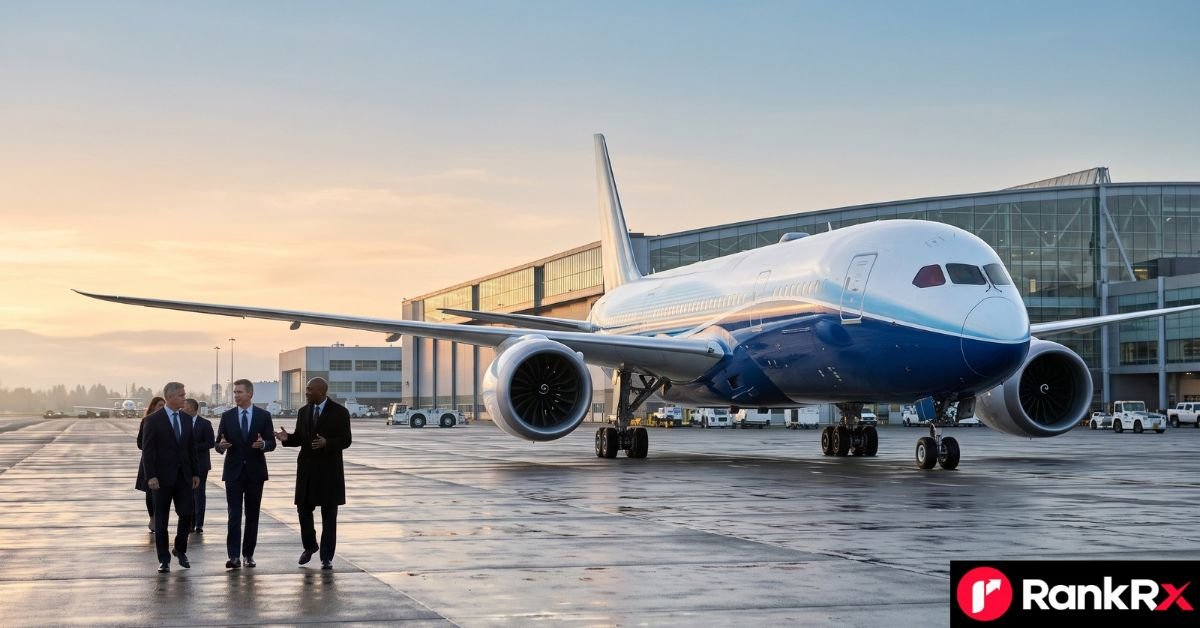

You are looking at a Boeing 787 Dreamliner on a tarmac, or perhaps you are reading a news report about an airline placing a multi-billion-dollar order. The question is simple: how much does one of these aircraft actually cost? The answer, frustratingly, is never a single number.
The Boeing 787 Dreamliner is one of the most commercially significant widebody aircraft in modern aviation. It is designed for long-range capability, improved fuel efficiency, and passenger comfort, making it a cornerstone of airline fleets worldwide. Yet, answering the question of what is the price of boeing 787 dreamliner requires peeling back the layers of an industry that runs on a two-tier pricing system: the headline-grabbing list price and the fiercely negotiated transaction price.
Disclaimer: Aircraft pricing is subject to change based on market conditions, order size, and manufacturer policies. The figures cited here are based on publicly available industry estimates and appraisals, and should not be treated as definitive transaction prices. For specific procurement decisions, consult aviation valuation specialists and official manufacturer disclosures.
Airlines rarely pay the published sticker price. Real-world transactions reveal dramatically lower per-aircraft costs, driven by order volume, market pressure, and the quiet leverage of a well-negotiated contract. For anyone researching this topic—whether you are an aviation enthusiast, a business analyst, or simply curious about the economics of modern flight—understanding the gap between these two figures is essential.
Here is the definitive breakdown of what a Dreamliner actually costs, the factors that move the needle, and the hidden expenses that determine the true price of ownership.
The List Price: A Reference Point, Not a Receipt

Boeing no longer actively publishes updated list prices for its commercial aircraft. This shift reflects the growing gap between official catalogue figures and real-world transaction values. Instead, the industry relies on the last widely published figures from the late 2010s as a baseline for comparison. These legacy figures remain the standard benchmark used by airlines, leasing companies, and analysts when discussing aircraft valuation. what is the price of boeing 787 dreamliner.
Based on those established benchmarks, here is how the three Dreamliner variants are positioned.
These figures are useful for comparing the 787 against competitors like the Airbus A350, but they are rarely what an airline actually transfers to Boeing’s bank account. As industry analysis notes, these reference prices do not reflect what airlines actually pay. In practice, nearly all aircraft are sold at significant discounts. what is the price of boeing 787 dreamliner.
The Real Price: What Airlines Actually Pay
This is where the numbers get interesting. The actual transaction value for a Boeing 787 is typically far below its list price. Discounts are not exceptions; they are the standard. what is the price of boeing 787 dreamliner.
Discounts commonly range between 30% and 50%, and in some cases even more for larger orders. A Boeing 787-9 with a nominal list price of around $300 million may be sold for closer to $150 million to $180 million. what is the price of boeing 787 dreamliner.
Industry data points to a consistent pattern. Appraisals for American Airlines’ 2025 787-9s ranged from $151.2 million to $161.1 million, well below the $292.5 million list price. Philippine Airlines’ 2024 order of 15 firm 787-10s was valued at **$170 million each** after discounts. Even more striking, IAG cited a $397 million reference price for its 787-10s but admitted to receiving substantial discounts, with typical deals landing around half of list value.
A recent order from El Al illustrates the same dynamic. The airline exercised options for six Boeing 787-9 aircraft, with the list price ranging from $290 million to $340 million. However, the actual cost per plane is generally between $120 million and $200 million, before interior customization. what is the price of boeing 787 dreamliner.
Why the Discounts Are So Deep
Airlines are not simply getting lucky at the negotiating table. Several structural forces drive these reductions.
- Order volume: Large fleet orders command far deeper cuts than small purchases. A carrier ordering dozens of jets has significantly more leverage than one buying a handful.
- Market pressure: Boeing and Airbus are both managing production backlogs and competitive pressures. Discounts of 40 to 60 percent off list are considered normal in the current market.
- Delivery timing: Airlines prepared to take delivery of aircraft originally intended for another customer can secure particularly attractive terms. what is the price of boeing 787 dreamliner.
- Customization: The base aircraft price is only part of the equation. Interior configuration and customization can add tens of millions of dollars to the final cost.
The Variant That Matters Most: Why the 787-9 Dominates
Not all Dreamliners are priced or valued equally. The 787-9 has emerged as the most sought-after model in the family, and that has a direct impact on its pricing dynamics. what is the price of boeing 787 dreamliner.
The 787-9 sits in the middle of the family and has become the most widely used version due to its balance of range and passenger capacity. It is the variant most airlines want, the one with the most liquid secondary market, and the one that sets the tone for negotiations across the family. what is the price of boeing 787 dreamliner.
For anyone tracking the Boeing 787 Dreamliner price, this matters because the 787-9 is the benchmark. When airlines negotiate for the 787-9, they are negotiating for the aircraft that will define their long-haul strategy for the next two decades. The 787-10, while larger and more expensive on paper, is often used as a lever in negotiations or deployed on high-density routes where its extra capacity justifies the higher sticker price.
The “Cloudysocial” Consideration: When Price Is Not the Full Story
The keyword that often accompanies searches for aircraft pricing—including the Boeing 787 Dreamliner price—sometimes intersects with broader discussions about asset valuation and market transparency. In aviation, as in any high-value asset market, the headline number is rarely the full story. what is the price of boeing 787 dreamliner.
A $397 million catalogue figure for a 787-10 can coexist with an appraised market value of around $170 million for the same aircraft type. That is not a contradiction; it is a reflection of how negotiated markets work. Airlines are not buying a commodity product off a shelf. They are negotiating complex, multi-year contracts that include maintenance agreements, training packages, and delivery schedules. what is the price of boeing 787 dreamliner.
For analysts and enthusiasts, the practical takeaway is to treat list prices as a starting reference and to look for appraised market values, airline disclosures, and independent valuation reports when trying to understand what a Dreamliner is really worth. what is the price of boeing 787 dreamliner.
The Hidden Costs: Operating and Ownership Expenses
The purchase price is only the beginning. Operating a Dreamliner is an expensive endeavor, and these costs are a critical part of the total economic picture. what is the price of boeing 787 dreamliner.
Fuel Efficiency
The 787 was designed to be significantly more fuel-efficient than the aircraft it replaces. The 787-8 burns less than five tons of fuel per hour, while the 787-9 burns around five tons per hour. The 787-10 burns slightly less than six tons per hour on most flights. This efficiency is a major selling point, as fuel is one of the largest ongoing expenses for any airline. what is the price of boeing 787 dreamliner.
Per-Seat Economics
When evaluating operating costs, airlines look at the cost per seat per hour. The Boeing 787-10 operates at just $19.54 per seat per hour**, making it one of the most economical widebody options. The 787-9 runs at **$25.86 per seat per hour, while the Airbus A330-900neo costs $22.43 per seat per hour. These figures illustrate why the 787-10 is attractive for high-density routes, while the 787-9 remains the versatile choice for a wide range of missions.
Charter and VIP Costs
For those looking beyond commercial airlines, the charter market offers a glimpse into the premium end of the spectrum. Flying a Boeing 787 on a charter basis costs around **$30,950 per hour**, while an Airbus A350 ranges between $30,000 and $40,000 depending on configuration and services. For VIP configurations, where the aircraft is stripped of economy seats and fitted with luxury interiors, the total cost can exceed $400 million per aircraft due to the expense of custom completions. what is the price of boeing 787 dreamliner.
The Airbus Comparison: How the 787 Stacks Up
Understanding the price of a Dreamliner also requires context. How does it compare to its closest rival, the Airbus A350? what is the price of boeing 787 dreamliner.
The list prices tell an interesting story. The smallest 787 variant, the 787-8, is listed at $248 million. The mid-sized 787-9 is listed at $292 million. The largest variant, the 787-10, is listed at $338 million, placing it between the A350-1000 and the A350-900. what is the price of boeing 787 dreamliner.
In practice, both manufacturers offer steep discounts, and the final transaction price depends on the specific deal, the number of aircraft ordered, and the competitive dynamics of the negotiation. The 787’s advantage lies in its fuel efficiency and its slightly lower list price for comparable capacity, but the A350 offers a wider cabin and different performance characteristics. For airlines, the choice often comes down to route strategy and fleet commonality rather than a simple price comparison. what is the price of boeing 787 dreamliner.
Common Mistakes to Avoid When Researching Aircraft Prices
The aviation pricing landscape is full of traps for the unwary. These are the most common errors to sidestep.
- Taking list prices at face value: A press release announcing a “$7 billion deal” based on catalogue prices does not mean the airline is writing a $7 billion cheque. Always look for post-discount estimates.
- Assuming all variants are priced alike: The 787-8, 787-9, and 787-10 occupy very different positions in the market. The 787-9 commands a premium because of demand; the 787-8 is cheaper but less liquid.
- Ignoring the secondary market: A new aircraft’s value is only part of the picture. Older 787-9s have traded at around $71 million, less than half the price of a new one. Residual values matter for leasing companies and airlines planning fleet renewals. what is the price of boeing 787 dreamliner.
- Overlooking engine choice: Engine selection affects both acquisition cost and long-term operating economics. The deep discounts seen in the 2026 market extend to engines as well, with airlines securing significant reductions on powerplants. what is the price of boeing 787 dreamliner.
- Confusing market value with transaction price: Appraised values from independent analysts are estimates, not receipts. They are useful benchmarks, but they are not the same as the price an airline actually negotiates.
Conclusion
The Boeing 787 Dreamliner price is not a single number. It is a spectrum that stretches from a headline-grabbing list figure of over $350 million to a negotiated transaction value closer to $150 million or $170 million for a new aircraft.
For anyone trying to understand the economics of modern aviation, the lesson is clear: the sticker price is a starting point for conversation, not a reflection of reality. The real value of a Dreamliner is determined in the details—order volume, variant demand, delivery timing, and the quiet leverage of a well-negotiated contract.
READ MORE: VIP Boeing 787 Dreamliner Price 5 Proven Truths on $400M Luxury
SEO is probabilistic, not a formula, and the same can be said for aircraft pricing. There are no universal guarantees, only layers of negotiation and market dynamics. But when you look beyond the headline number, you gain a clearer understanding of how the aviation industry actually works. what is the price of boeing 787 dreamliner.
FAQs
What is the list price of a Boeing 787 Dreamliner?
List prices range from approximately $248 million for the 787-8 to around $355 million for the 787-10, depending on the variant and the reference year used. what is the price of boeing 787 dreamliner.
How much do airlines actually pay for a Boeing 787?
Airlines typically pay between $120 million and $200 million per aircraft after discounts, before interior customization costs are added. A new 787-9 was valued at around $151 million to $161 million in recent appraisals.
Why is there such a big difference between list price and actual price?
List prices serve as reference points for comparison and press announcements. Real transactions involve negotiated discounts that commonly range from 30 to 50 percent, and sometimes more for large fleet orders.
Which Boeing 787 variant is the most expensive?
The 787-10 is the largest and most expensive variant, with a list price of around $338 million to $355 million. However, its real-world transaction price is typically far lower, often around $170 million after discounts.
Does the Boeing 787 Dreamliner price include engines?
List prices are typically quoted for the airframe, but engine selection is a separate negotiation. Engine discounts are also common in the current market.
Why has the Boeing 787 list price more than doubled since 2011?
The original 787-8 entered service with a list price of approximately $120 million. The current reference figures reflect inflation, increased specification, and the industry’s reliance on legacy catalogue prices as benchmarks rather than real transaction values. what is the price of boeing 787 dreamliner.
For more updates visit: rankrx.co.uk