


Leadership in the modern business world requires more than managing employees, increasing revenue, or maintaining a company’s market position. Successful executives must recognize emerging trends, respond to changing customer expectations, and guide organizations through periods of technological and economic uncertainty. Few industries demonstrate these challenges more clearly than automotive manufacturing and enterprise technology.
The professional journeys of Oliver Zipse and Satya Nadella offer interesting perspectives on how leadership can influence established global companies. Zipse became widely recognized for his work at BMW Group, where he guided the German automaker through major changes involving electric mobility, manufacturing, and digital innovation. Nadella, meanwhile, transformed Microsoft’s strategic direction by emphasizing cloud computing, artificial intelligence, collaboration, and a broader technology ecosystem.
Although these executives operated in different industries and faced distinct competitive pressures, their experiences highlight several important business themes. Both understood the importance of adapting established organizations, investing in future technologies, and maintaining a long-term perspective during periods of significant change.
Who Are Oliver Zipse and Satya Nadella?
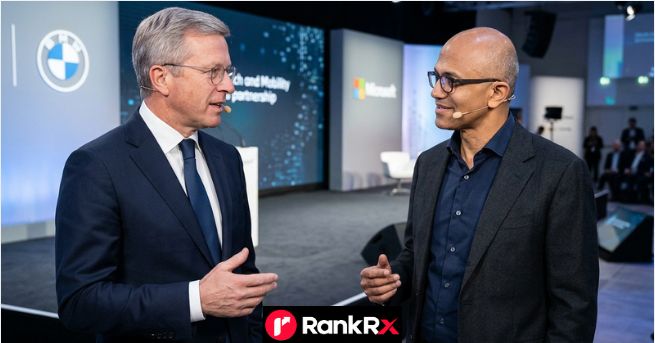
Understanding their professional backgrounds provides useful context for examining their leadership approaches.
Oliver Zipse: A Career Built Around Automotive Innovation
Oliver Zipse is a German business executive who spent approximately 35 years working for BMW Group. Born in Heidelberg, Germany, in 1964, he developed an extensive understanding of automotive engineering, production systems, and international business operations.
Zipse joined BMW in 1991 and worked across several areas of the organization. His professional experience included responsibilities involving production, corporate planning, and manufacturing operations. This broad background helped him understand the operational complexity of running an international automobile manufacturer.
In August 2019, Zipse became chairman of BMW AG’s Board of Management, commonly referred to as the company’s chief executive leadership position.
During his tenure, BMW faced several major challenges, including the transition toward electric vehicles, changing environmental expectations, supply chain disruptions, and increasing competition from technology-focused automotive companies.
Zipse’s leadership emphasized technological flexibility, manufacturing efficiency, and the development of BMW’s next-generation vehicle platforms.
He completed his tenure as chairman on May 13, 2026, handing leadership to Milan Nedeljković. His departure also marked the conclusion of a 35-year professional career with BMW.
One of the most recognizable initiatives associated with his leadership was BMW’s NEUE KLASSE development program, designed to establish a foundation for the company’s next generation of vehicles and technologies.
Satya Nadella: The Executive Behind Microsoft’s Strategic Transformation
Satya Nadella is an Indian-born American business executive who serves as chairman and chief executive officer of Microsoft.
Born in Hyderabad, India, Nadella studied electrical engineering before pursuing graduate education in computer science and business administration. He joined Microsoft in 1992 and gradually developed experience across several important business and technology divisions.
Before becoming CEO in February 2014, Nadella led Microsoft’s Cloud and Enterprise group. His work in that position helped establish the experience and strategic understanding that would later influence Microsoft’s broader transformation.
When he became CEO, Microsoft was navigating a competitive technology environment. Traditional software businesses were changing, cloud computing was becoming increasingly important, and consumer technology companies were introducing new ways to access digital services.
Nadella placed greater emphasis on cloud infrastructure, subscription-based services, developer communities, and cross-platform accessibility.
Under his leadership, Microsoft strengthened its position in cloud computing through Azure and expanded its influence across enterprise software, productivity applications, cybersecurity, and artificial intelligence.
His leadership philosophy also emphasized organizational learning, collaboration, and a growth mindset.
Comparing the Leadership Philosophies of Oliver Zipse and Satya Nadella
Although automotive manufacturing and software development operate under different business conditions, both industries require executives to make complicated decisions about investment, innovation, and future competitiveness.
The leadership experiences of Zipse and Nadella illustrate different ways of approaching these responsibilities.
Strategic Thinking and Long-Term Planning
Zipse’s approach to corporate strategy focused heavily on maintaining BMW’s competitiveness while preparing for changes in global mobility.
Automotive companies must make substantial investments in vehicle platforms, factories, batteries, software systems, and supply chains. These investments often require years of planning before delivering measurable commercial results.
BMW’s NEUE KLASSE program reflected this long-term approach. Rather than treating electric mobility as an isolated product category, the company worked toward a broader technological foundation for future vehicles.
Nadella approached long-term planning through Microsoft’s evolving technology ecosystem.
Cloud infrastructure, artificial intelligence, enterprise applications, and developer services became important components of Microsoft’s business strategy.
His approach demonstrated how established software companies could reposition themselves by recognizing that customers increasingly wanted connected services rather than isolated products.
Both executives understood that maintaining an established market position requires preparing for the next generation of customer expectations.
Building a Culture of Innovation
Innovation depends on more than introducing new products. It also requires organizational structures that encourage experimentation, learning, and collaboration.
At BMW, innovation involves coordinating engineers, designers, manufacturing specialists, software developers, suppliers, and international business teams.
Zipse’s extensive experience within BMW gave him an understanding of how these different departments contribute to the development and production of vehicles.
At Microsoft, Nadella encouraged a cultural shift toward collaboration and continuous learning.
His growth mindset philosophy challenged employees to become more open to new ideas, learn from mistakes, and work across traditional organizational boundaries.
The industries are different, but the underlying leadership principle is similar: organizations become more adaptable when employees have opportunities to develop new capabilities and contribute to meaningful innovation.
How Oliver Zipse Influenced BMW’s Automotive Strategy
BMW operates in a highly competitive international market where traditional automakers face pressure from electric vehicle manufacturers, changing regulations, and evolving customer preferences.
Zipse’s leadership period coincided with an important stage in this transition.
The Development of NEUE KLASSE
One of the most important strategic initiatives associated with Zipse was NEUE KLASSE.
The program represents a major technological direction for BMW, involving new vehicle architectures, electric mobility, digital experiences, and advanced manufacturing concepts.
Its importance extends beyond the development of individual electric vehicles.
A new vehicle platform can influence multiple aspects of an automotive business, including production efficiency, battery integration, software architecture, vehicle performance, and customer experience.
This approach allows an automaker to prepare for future market requirements while maintaining a consistent technological foundation.
A Technology-Neutral Automotive Strategy
Another important aspect of Zipse’s leadership was BMW’s technology-neutral approach.
Instead of relying exclusively on battery-electric vehicles, BMW continued developing different powertrain technologies to serve markets with varying infrastructure, economic conditions, and customer preferences.
This strategy reflected the complexity of global automotive markets.
For example, customers in regions with extensive charging infrastructure may be more comfortable adopting fully electric vehicles. Buyers in areas with limited charging availability may continue preferring conventional or hybrid powertrains.
A flexible strategy can help manufacturers address these differences without assuming that every market will transition at the same speed.
Managing Global Automotive Challenges
Zipse also led BMW during a period affected by the COVID-19 pandemic, supply chain difficulties, geopolitical uncertainty, and changing economic conditions.
Automotive manufacturing depends on extensive international supplier networks. Disruptions involving semiconductors, raw materials, transportation, or production facilities can affect vehicle availability and operating costs.
Managing these challenges requires coordination across multiple countries and business divisions.
His tenure demonstrated the importance of balancing immediate operational requirements with investments in future technologies.
How Satya Nadella Changed Microsoft’s Business Direction
Satya Nadella’s leadership at Microsoft offers another example of how an established organization can reposition itself in response to technological change.
His influence can be seen across several major areas of the company’s operations.
Expanding Microsoft’s Cloud Computing Business
Cloud computing became one of the most important foundations of Microsoft’s modern business strategy.
Through Microsoft Azure, the company expanded its infrastructure and platform services for organizations of different sizes.
Businesses increasingly use cloud platforms to host applications, manage information, support remote operations, and develop digital products.
This shift changed how many organizations purchased and managed technology.
Instead of depending entirely on physical servers and traditional software installations, customers could access scalable computing resources through cloud services.
Nadella’s previous experience leading Microsoft’s Cloud and Enterprise group helped establish the strategic foundation for this transformation.
Advancing Artificial Intelligence
Artificial intelligence has become another central component of Microsoft’s business direction.
The company has integrated AI capabilities into products and services across its ecosystem, including Microsoft 365 Copilot, Azure AI, and developer tools.
These technologies aim to help individuals and organizations automate repetitive activities, analyze information, generate content, and improve productivity.
However, AI adoption also introduces important responsibilities.
Businesses must consider data privacy, cybersecurity, accuracy, intellectual property, transparency, and responsible deployment. oliver zipse and satya nadella.
Nadella’s leadership has placed Microsoft at the center of discussions about how artificial intelligence can become a practical part of everyday business operations.
Strengthening Enterprise Productivity
Microsoft’s productivity ecosystem includes widely used products such as Word, Excel, PowerPoint, Teams, and Outlook. oliver zipse and satya nadella.
Under Nadella, the company continued developing these services around cloud accessibility, collaboration, and connected workflows. oliver zipse and satya nadella.
This strategy recognizes that modern employees frequently work across multiple devices, locations, and business applications. oliver zipse and satya nadella.
A connected productivity environment can help organizations reduce unnecessary administrative work and make information easier to access.
For Microsoft, these services also strengthen relationships with enterprise customers and create opportunities to introduce additional cloud and AI capabilities. oliver zipse and satya nadella.
What Connects the Business Strategies of These Two Executives?
Oliver Zipse and Satya Nadella did not lead the same type of company, and their professional responsibilities were not identical. Nevertheless, their experiences provide useful comparisons across several areas of business leadership.
Adapting Established Companies to New Technologies
Both BMW and Microsoft had established business models before these executives reached their top leadership positions. oliver zipse and satya nadella.
BMW built its reputation around engineering, premium automobiles, and manufacturing expertise. Microsoft became one of the world’s most recognizable software and technology companies.
However, established strengths do not automatically guarantee future success.
BMW needed to respond to electrification, connected vehicles, and software-driven automotive experiences.
Microsoft needed to respond to cloud computing, mobile technology, artificial intelligence, and changing enterprise requirements. oliver zipse and satya nadella.
Their experiences show that established companies must be willing to reconsider traditional business assumptions.
Balancing Innovation With Existing Customers
Technological transformation can create opportunities, but it can also introduce uncertainty.
An automotive manufacturer cannot simply abandon its existing customers while developing future electric vehicle technologies. It must maintain product quality, manufacturing reliability, and customer confidence.
Similarly, Microsoft must continue supporting established enterprise customers while introducing new cloud and AI capabilities. oliver zipse and satya nadella.
Successful transformation requires understanding what customers value today while preparing them for what they may need tomorrow. oliver zipse and satya nadella.
Investing in People and Organizational Capabilities
Technology investments are most effective when employees have the knowledge and resources needed to use them.
Automotive innovation requires engineers, technicians, production specialists, software developers, and supply chain professionals. oliver zipse and satya nadella.
Technology companies depend on software engineers, researchers, cybersecurity specialists, cloud architects, and customer-facing teams.
Both industries demonstrate that long-term competitiveness depends on developing human capabilities alongside technical infrastructure. oliver zipse and satya nadella.
Important Leadership Lessons for Modern Businesses
The experiences of these executives offer several practical lessons for entrepreneurs, managers, and business owners.
First, prepare for technological change before it becomes unavoidable. Companies that wait until their existing products lose relevance may find it difficult to catch up with competitors. oliver zipse and satya nadella.
Second, maintain a clear long-term strategy. Large investments in technology, infrastructure, and talent require consistent direction rather than frequent changes in priorities.
Third, understand customer expectations. Innovation should solve real problems rather than introduce technology simply because it is available. oliver zipse and satya nadella.
Fourth, encourage organizational learning. Employees who can develop new skills and exchange ideas help businesses respond more effectively to unexpected challenges. oliver zipse and satya nadella.
Finally, remain flexible. Markets, regulations, customer behavior, and technology can change quickly. Business strategies should have enough flexibility to respond without losing their overall purpose.
These principles are relevant beyond the automotive and software industries. Retail, financial services, manufacturing, healthcare technology, and professional services can all benefit from similar approaches.
Frequently Asked Questions
1. Who are Oliver Zipse and Satya Nadella?
Oliver Zipse is a German business executive and former chairman of BMW AG’s Board of Management. Satya Nadella is the chairman and CEO of Microsoft. Both became prominent international business leaders through their work guiding established companies through technological and organizational change.
2. What company did Oliver Zipse lead?
Oliver Zipse served as chairman of BMW AG’s Board of Management from August 2019 until May 13, 2026. He spent approximately 35 years working for BMW Group.
3. Is Oliver Zipse still the CEO of BMW?
No. Oliver Zipse completed his tenure in May 2026. Milan Nedeljković succeeded him as chairman of BMW AG’s Board of Management on May 14, 2026. oliver zipse and satya nadella.
4. What is Satya Nadella known for?
Satya Nadella is known for leading Microsoft’s strategic transformation, particularly its expansion in cloud computing, enterprise services, artificial intelligence, and collaborative productivity software.
5. When did Satya Nadella become Microsoft’s CEO?
Satya Nadella became Microsoft’s chief executive officer in February 2014. He was subsequently appointed chairman of the company’s board in June 2021. oliver zipse and satya nadella.
6. What is BMW’s NEUE KLASSE initiative?
NEUE KLASSE is BMW’s next-generation vehicle and technology program. It focuses on areas such as electric mobility, digital technology, vehicle architecture, and manufacturing innovation.
7. How did Satya Nadella influence Microsoft’s cloud strategy?
Nadella helped strengthen Microsoft’s cloud-focused direction, building on his earlier experience leading the Cloud and Enterprise group. Azure became a major part of the company’s broader enterprise technology ecosystem.
8. What leadership qualities do Zipse and Nadella share?
Their leadership experiences highlight strategic planning, technological adaptation, organizational development, customer awareness, and the importance of preparing established businesses for future market changes.
9. Are Oliver Zipse and Satya Nadella business partners?
There is no established basis for describing them as direct business partners. They are associated with different companies and industries. Their names are relevant together primarily when comparing international corporate leadership and technological transformation. oliver zipse and satya nadella.
10. Why are their leadership journeys relevant to modern businesses?
Their experiences illustrate how large organizations can respond to changing technologies, competitive pressures, and customer expectations. Their approaches provide useful examples for understanding strategic planning and business transformation.
Conclusion
The professional journeys of Oliver Zipse and Satya Nadella demonstrate two different approaches to leading established global organizations through technological change.
Zipse’s work at BMW focused on automotive innovation, manufacturing capabilities, electric mobility, and the development of future vehicle platforms. Nadella’s leadership at Microsoft emphasized cloud computing, artificial intelligence, enterprise productivity, and organizational learning. oliver zipse and satya nadella.
Although their industries have different operating models, both experiences reinforce an important business principle: long-term success depends on recognizing change and preparing organizations to respond effectively.
For entrepreneurs, executives, and business professionals, these leadership journeys offer valuable perspectives on innovation, adaptability, and strategic decision-making. Their influence also provides a useful framework for understanding how established companies can remain relevant in an increasingly technology-driven global economy.