

Traveling offers a unique blend of excitement and adventure, but it can also introduce a host of unexpected risks. As you prepare for your next adventure, a crucial question arises: Is travel insurance worth it? This article delves deep into the what, why, and how of travel insurance, enabling you to make informed decisions for your journeys.
Understanding Travel Insurance
Travel insurance is a financial safety net that can protect travelers from a myriad of potential issues, from health emergencies to trip cancellations. But what exactly does it entail, and is it necessary for your specific plans?
What Does Travel Insurance Cover?
Travel insurance typically encompasses three main categories of coverage:
- Trip Cancellation/Interruption Insurance:
- This aspect reimburses you for nonrefundable expenses if you need to cancel your trip due to unforeseen events such as illness, family emergencies, or natural disasters.
- Medical Coverage:
- Provides financial protection for medical emergencies occurring while you’re abroad. This can cover hospital visits, medical evacuation, and emergency care.
- Baggage Protection:
- Compensation for lost, stolen, or damaged baggage. This coverage can provide funds to replace essential items while you wait for your luggage to be returned.
Additional Coverage Options
Beyond these core categories, many insurance providers offer supplemental coverage options:
- Emergency Evacuation: Essential for travelers heading to remote areas, this covers the cost of transporting you to the nearest medical facility.
- Rental Car Coverage: Protects against accidents and damages involving rental cars abroad.
- Adventure Sports Coverage: Important for thrill-seekers, this additional coverage can protect you when engaging in risky activities like skiing or scuba diving.
- Travel Delay Coverage: Offers reimbursement for additional accommodation and meal expenses if your trip gets delayed due to unforeseen circumstances.
The Case for Travel Insurance
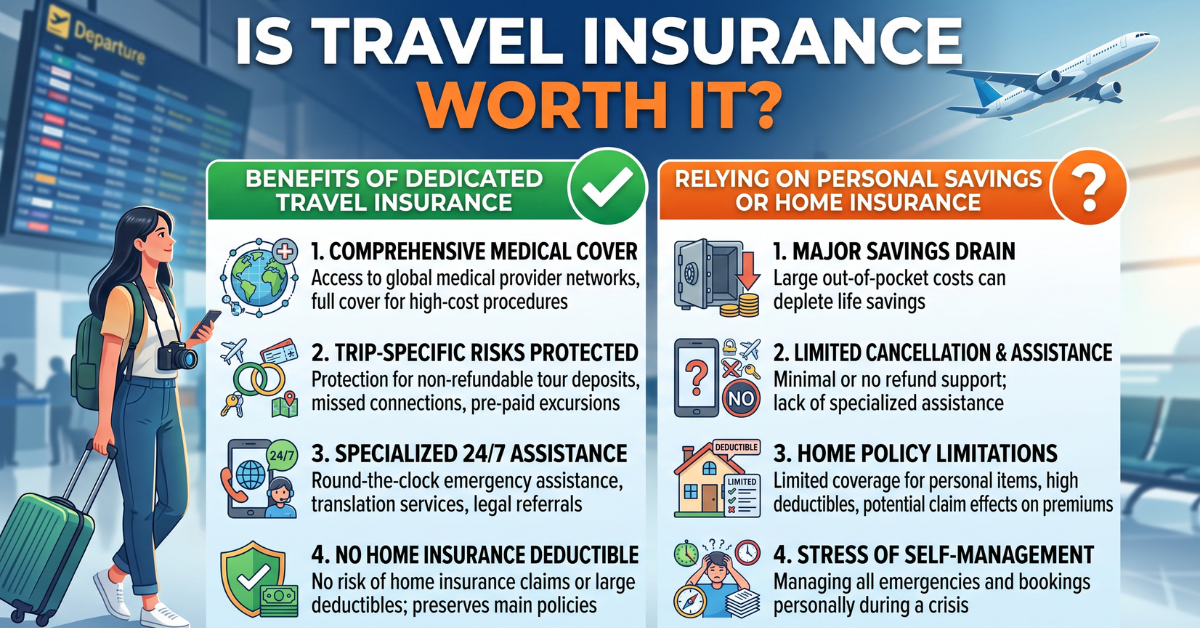
1. Protecting Against Unexpected Medical Emergencies
When traveling internationally, your domestic health insurance may offer little to no coverage for medical expenses incurred abroad. This can lead to exorbitant bills in the event of a medical emergency, pushing many travelers to reconsider their view on travel insurance.
- Cost of Medical Care Abroad: For instance, a routine hospital visit in countries like the USA or Canada can escalate quickly, often costing thousands of dollars. Without travel insurance, you would bear the full brunt of these expenses.
- Example Scenarios: Imagine hiking in the Alps and suffering a fall. A medical evacuation could easily exceed $30,000. Without insurance, this expense would fall squarely on your shoulders.
2. Protecting Your Financial Investments
Many aspects of travel involve significant financial commitments. Flights, hotel bookings, and activities often require upfront payments, and many of these ticket prices can be steep.
- Nonrefundable Costs: If your plans change last minute—be it due to illness or a family emergency—you could lose that investment. Cancellation coverage ensures that you’re financially safeguarded in such situations.
- Illustrative Case: Consider a honeymoon booked months in advance. If sudden illness strikes right before the trip, losing thousands of pounds worth of bookings can be devastating. Travel insurance can mitigate this risk.
3. Traveling to High-Risk Areas
Certain destinations inherently carry more risks, be it due to political unrest, natural disasters, or extreme weather conditions.
- Adventure Sports: Planning an exotic trip to the Caribbean? Engaging in water sports? The risks rise. Without coverage for adventure activities, a mishap can lead to not only injury but hefty medical bills.
- Real-World Application: In regions prone to natural disasters, such as hurricanes or earthquakes, travel insurance can provide peace of mind, ensuring you’re covered if your trip is disrupted.
4. Dealing with Lost or Delayed Luggage
Imagine your baggage gets lost or delayed during a long-haul flight. The inconvenience can ruin the beginning of your trip, and purchasing replacement items can add up.
- Essentials on Arrival: Travel insurance with baggage protection ensures that you can claim back money for essentials you need immediately after losing your luggage.
5. Tight Itineraries and Delays
Traveling with multiple connections or a packed itinerary raises the stakes for missed connections and delays.
- Mitigating Costs: If a flight delay forces you to miss a connecting flight, travel insurance can help mitigate costs associated with rebooking or accommodations.
6. Reduced Anxiety and Stress
Travel insurance provides peace of mind. Knowing you’re covered in case of emergencies lets you focus more on enjoying your trip rather than worrying about potential mishaps.
When You Might Not Need Travel Insurance
- Fully Refundable Bookings: If your travel plans include fully refundable flights and accommodations, the need for cancellation coverage may lessen significantly.
- Short or Low-Cost Trips: For quick weekend getaways where the total expense is low, the price of insurance might exceed potential losses.
- Credit Card Perks: Many premium travel credit cards come with built-in travel protections, including trip cancellation and delays. Ensure you’re aware of your card’s stipulations before purchasing additional coverage.
- Robust Domestic Coverage: If your health insurance adequately covers medical needs while traveling domestically and provides for any potential emergencies, purchasing travel insurance may be unnecessary.
Evaluating Your Travel Needs
Key Questions to Ponder
Before purchasing travel insurance, reflect on the following:
- What are the total expenses involved in the trip?
- Are any components of your trip nonrefundable?
- Where will you be traveling? Is that area known for risks or health concerns?
- What is your health condition? Do you have any existing medical conditions that might require attention during your travels?
Cost of Travel Insurance
Travel insurance typically costs between 5% to 10% of your total trip investment. This can vary based on factors including:
- Travel destination
- Length of the trip
- Age and health of travelers
- Coverage limits and deductibles
While it may seem like an added expense, the potential financial protection far outweighs the costs associated with not having coverage.
Tips for Choosing the Right Travel Insurance
1. Compare Policies
Not all travel insurance policies are created equal. Use comparison tools to evaluate different companies and policies. Look for comprehensive coverage that caters specifically to your travel style.
2. Read the Fine Print
Before committing, thoroughly understand what is covered and what is excluded. Look for common exclusions like pre-existing medical conditions, certain high-risk activities, or restrictions based on your destination. is travel insurance worth it.
3. Consider Customer Reviews
Checking reviews and experiences of other travelers can provide insights into the reliability and responsiveness of the insurance provider when claims arise. is travel insurance worth it.
4. Evaluate Coverage Limits
Ensure the coverage limits align with your trip costs and potential medical expenses. Higher limits may be necessary for international travel. is travel insurance worth it.
5. Understand Claims Process
Familiarize yourself with how to file claims. A smooth claims process is crucial during a stressful situation when you’re seeking reimbursement. is travel insurance worth it.
6. Consider Assistance Services
Many travel insurance policies provide assistance services that can help with logistics like emergency evacuations or finding medical care. This can be incredibly valuable when abroad. is travel insurance worth it.
Common Mistakes to Avoid
- Not Reading Exclusions: Failing to read the exclusions in your policy can lead to unwelcome surprises when filing a claim. is travel insurance worth it.
- Assuming All Insurance is the Same: Not all policies offer the same benefits. Compare details before choosing.
- Over-Insuring Your Trip: While more coverage may seem appealing, evaluate what you actually need based on your trip type and existing protections. is travel insurance worth it.
- Ignoring Health History: Your health conditions can impact coverage. Disclose any pre-existing conditions when purchasing insurance. is travel insurance worth it.
- Relying Solely on Credit Card Insurance: While credit card coverage can help, it may be limited in scope. Always check what’s covered. is travel insurance worth it.
The Final Verdict: Is Travel Insurance Worth It?
Ultimately, the answer depends on several factors, including your travel style, destination, planned activities, and personal preferences. is travel insurance worth it.
- For expensive trips—particularly those that are nonrefundable, involve international travel, or include high-risk activities—travel insurance typically proves its worth. is travel insurance worth it.
- For simpler, low-cost getaways—those with flexible bookings or minimal financial investment—the added expense of insurance might not be justified. is travel insurance worth it.
Key Takeaways
- Assess individual needs when considering travel insurance.
- Coverage can save thousands in potential medical emergencies abroad.
- Fully refundable bookings may not require additional insurance.
- Understanding policy details and exclusions is crucial. is travel insurance worth it.
- Always verify existing coverage through health insurance or credit cards.
Conclusion
Travel insurance can be a valuable component of your travel planning process, offering protection against various risks. Whether or not it is worth it ultimately lies in individual circumstances and potential risks associated with your specific trip. Always weigh the benefits versus the costs and make an informed decision that aligns with your travel needs.
travel insurance benefits, travel risk management, medical coverage abroad, trip cancellation insurance, travel policy comparisons, adventure travel insurance, travel expense protection, healthcare while traveling, nonrefundable trip insurance, travel risk assessment is travel insurance worth it.
FAQs
What types of travel insurance are available?
Common types include trip cancellation/interruption insurance, medical coverage, and baggage protection.
Is tvel insurance mandatory for all travelers?
While it is not legally required, it is strongly recommended for international travel.
Can I purchase travel insurance after booking my trip?
Yes, but it’s best to obtain it as soon as your travel plans are finalized for maximum coverage.
Do I need separate coverage for adventure activities?
Yes, many standard policies do not cover adventure sports; it’s essential to purchase supplemental coverage if engaging in such activities.
How much does travel insurance typically cost?
On average, insurance costs range from 5% to 10% of your total trip investment.
For more updates visit: rankrx.co.uk