
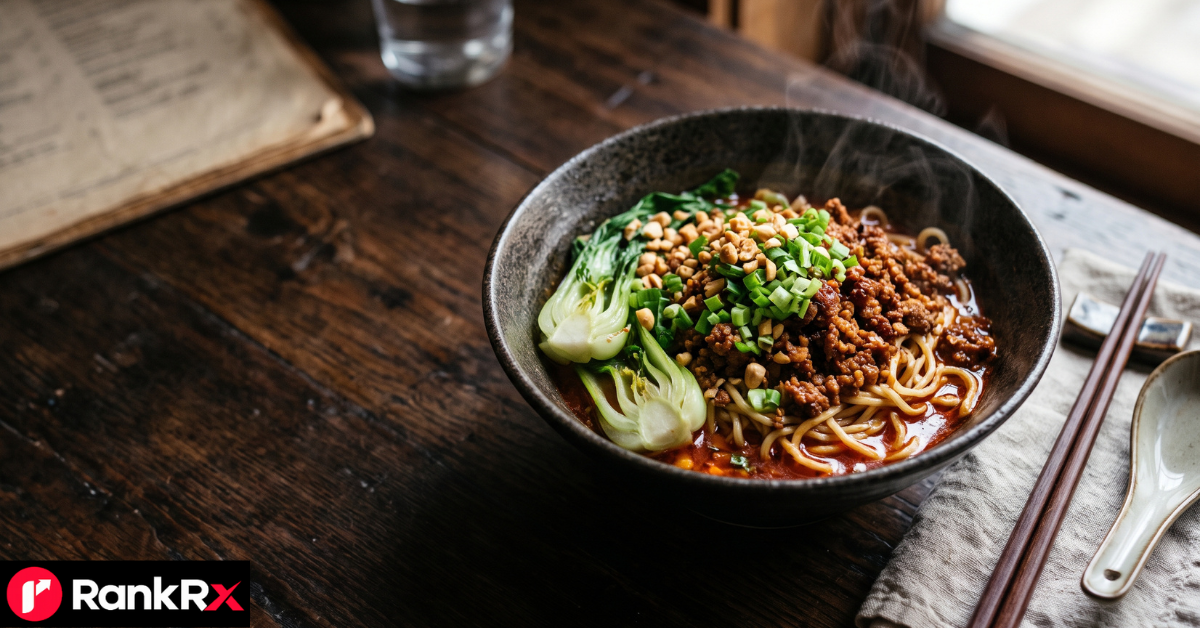

You’ve had them in a Sichuan restaurant: a small bowl of noodles coated in a glossy, red, nutty sauce, with crisp minced pork on top and a tingling, numbing heat that builds with every bite. Then you try a recipe at home and end up with something that tastes like peanut butter noodles with chilli.
The gap is usually a few ingredients and one technique. Dan dan noodles are simple, but they depend on specific things: a good chilli oil, Sichuan peppercorns, a nutty sesame paste and a savoury preserved vegetable called ya cai.
Disclaimer
This article is for general cooking information only and is not dietary, medical or allergy advice. Recipe amounts, ingredients and availability vary. Always check labels for allergens, cook meat thoroughly and speak to a doctor or dietitian about your own dietary needs. SEO and content results vary by site, niche and competition, and no tactic can guarantee a ranking.
This guide explains where the dish comes from, what goes into an authentic bowl, how to make it at home, what to swap if you can’t find something in a UK supermarket and how to avoid the common mistakes. If you publish recipes, there’s also a section on writing a recipe page that readers and search engines can trust.
Recipe amounts vary between cooks and sources, so treat the quantities here as a starting point and adjust to taste. This is general cooking information, not dietary or medical advice.
What Are Dan Dan Noodles?
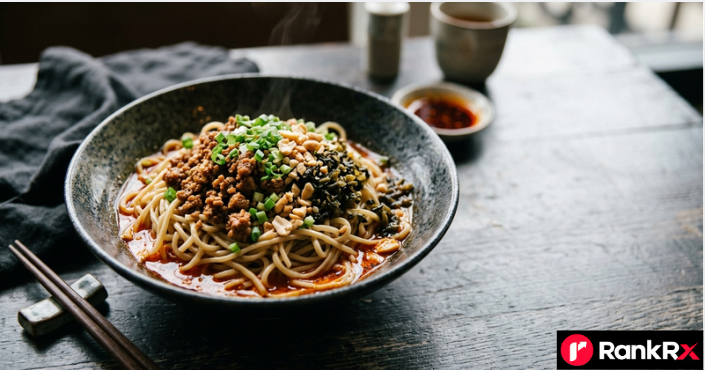
Wikipedia describes dandan noodles as a Sichuan dish of wheat noodles served with a spicy sauce that usually contains pickled vegetables such as zha cai or ya cai, chilli oil, Sichuan pepper and minced pork, topped with scallions and peanuts. dan dan noodles.
The name
The name comes from a carrying pole. Wikipedia explains that street vendors carried the dish over their shoulders, with two baskets of noodles and sauce hanging at each end of a pole. The name translates as “noodles carried on a pole,” though “peddler’s noodles” may be a better translation. dan dan noodles.
The original is dry, not soupy
Several recipe sources make the same point: the original street version was a dry noodle dish, with the noodles coated in a concentrated sauce and topped with a ready-made pork topping, with no soup. Wikipedia notes that the soup variant comes from Hong Kong, tones down the spice and sometimes includes sesame paste or peanut butter.
The Quick Recipe
Serves: 2
Time: about 30 minutes
| Part | Ingredients (starting amounts) |
|---|---|
| Noodles | 200g fresh or dried thin wheat noodles |
| Pork topping | 150g minced pork with some fat, 2 tbsp ya cai (rinsed and chopped), 1 tbsp neutral oil, 1 tbsp light soy sauce, 1 tsp Shaoxing wine |
| Sauce, per bowl | 1 tbsp sesame paste, 1½ tbsp light soy sauce, 1 to 2 tsp Chinese black vinegar, 1 to 2 tbsp chilli oil with sediment, ¼ to ½ tsp ground Sichuan pepper, a pinch of sugar, 2 to 3 tbsp hot noodle water |
| To finish | Chopped scallions, crushed roasted peanuts, a handful of blanched greens |
Amounts in published recipes vary a lot. One uses about half a tablespoon of sesame paste and two-thirds of a tablespoon of chilli oil per 100g of noodles, while others use two tablespoons of each. That’s why I’ve given ranges.
Step by Step
1. Cook the pork topping
Heat the oil in a pan or wok. Add the pork and cook, breaking it up, until it’s browned and starting to crisp. Add the ya cai and soy sauce, and stir until the mixture is dry and fragrant. One recipe fries the ya cai for three to five minutes until dry and golden brown. dan dan noodles.
Cook the pork all the way through before serving.
2. Mix the sauce in the bowl
Put the sesame paste, soy sauce, black vinegar, chilli oil, Sichuan pepper and sugar into each serving bowl. A recipe from Asian Foods Daily suggests whisking sesame paste, soy sauce, black vinegar, sugar and part of the chilli oil first, then adding the rest later. dan dan noodles.
3. Cook the noodles and greens
Boil the noodles until just tender, with a bit of bite. Blanch the greens in the same water for the last minute or so.
4. Loosen the sauce
Ladle a few tablespoons of hot noodle water into each bowl and stir. This turns the thick paste into a smooth, glossy sauce. A recipe from The Clean Eat uses about 30 ml of hot noodle water for a single serving.
5. Add noodles and toppings
Drain the noodles well, add them to the bowls and top with the pork, greens, scallions and peanuts. Add a final drizzle of chilli oil and a little more Sichuan pepper. Toss everything together before eating.
The Key Ingredients, Explained
| Ingredient | What it does |
|---|---|
| Chilli oil (with sediment) | Heat, colour and savoury depth. Chinese chilli oil is not the same as chilli sauce. |
| Sichuan peppercorns | The tingling, numbing feeling known as mala |
| Chinese sesame paste | A nutty, creamy base that rounds out the heat |
| Ya cai | Preserved mustard greens that add salty, savoury crunch |
| Light soy sauce | Salt and umami |
| Chinese black vinegar | A mellow tang that lifts the sauce |
| Minced pork | The savoury topping, often cooked until crisp |
| Scallions and peanuts | Freshness and crunch |
Ya cai
Several sources describe ya cai as the soul of the dish. One calls it the most famous topping from Yibin in Sichuan. If you buy a packet, rinse it first, because it’s salty, and one recipe advises rinsing it completely before use.
Chilli oil
Sources suggest an infused chilli oil with Sichuan peppercorns, star anise and sometimes cinnamon, and one recipe notes that the sediment adds flavour. Use a good-quality jar, or make your own.
Sichuan peppercorns
These give the signature numbing sensation. One source says that keeping ya cai and Sichuan peppercorns preserves the authentic flavour profile.
Buying Ingredients in the UK
Most of these are available in Chinese and East Asian supermarkets, and online.
| If you can’t find… | Possible swap |
|---|---|
| Chinese sesame paste | Tahini. One recipe lists tahini as a substitute, though the flavour is milder because it uses raw rather than toasted sesame |
| Ya cai | Zha cai, which Wikipedia says is also used. Rinse it well |
| Chinese black vinegar | A good-quality dark vinegar as a stopgap, though the flavour will differ |
| Chilli oil with Sichuan peppercorns | A good chilli oil plus extra ground Sichuan pepper |
| Thin alkaline noodles | Fresh thin egg or wheat noodles |
Swaps change the flavour, so don’t expect an identical result.
Adjusting the Spice
One guide gives a simple scale for heat:
- Mild: about 1 teaspoon of chilli oil, without the sediment, and a little extra sesame paste.
- Medium: about 2 tablespoons of chilli oil with sediment.
- Spicy: 3 to 4 tablespoons of chilli oil, plus a teaspoon of doubanjiang, a Sichuan chilli bean paste.
Start lower than you think you need. You can add more chilli oil at the table, but you can’t take it out.
Variations
Vegetarian
Replace the pork with finely chopped mushrooms, firm tofu or a plant-based mince, and cook until browned. Check that your ya cai and soy sauce are suitable if you’re avoiding animal products.
Soup version
The Hong Kong-style soup version uses broth and tones down the spice, according to Wikipedia. It’s a different dish, so don’t expect the same intensity.
Gluten-free
Authentic noodles are wheat-based, so look for gluten-free noodles and a gluten-free soy sauce, and check the labels on chilli oil and sesame paste.
Allergens and Food Safety
- Allergens: The dish typically contains wheat, soy, sesame, peanuts and pork, depending on the recipe. Check every label if anyone has an allergy.
- Pork: Cook minced pork all the way through.
- Leftovers: Cool and refrigerate quickly, and reheat until piping hot.
- Heat: Sichuan chilli and peppercorns can cause burning or tingling that some people find uncomfortable. Start mild if you’re unsure.
If you have a medical condition or food allergy, speak to a doctor or dietitian about what’s right for you.
For Recipe Publishers: Making a Dan Dan Noodles Page That Earns Trust
This is RankRX, so here’s the content-strategy angle. These are general best practices, and nobody can guarantee a ranking.
A search for dan dan noodles is crowded with recipes, and many of them look alike. A few habits help a page stand out:
- Cook it yourself and say so. Original photos and notes about what went wrong in testing are real first-hand experience, which fits Google’s E-E-A-T guidance.
- Be accurate about origin. The carrying-pole story is well documented, but avoid unsupported claims about exact dates or inventors.
- Don’t oversell “authentic.” Say what you changed, such as using tahini, and why.
- Explain ingredients and swaps, especially for readers outside China, as the UK table above does.
- Use clear structure. An ingredients table, numbered steps and a short FAQ suit both readers and search features.
- Consider Recipe structured data. Google supports recipe markup, so check Google Search Central for the current requirements. It doesn’t guarantee a rich result.
- Handle spelling variants. Readers search “dandan,” “dan dan” and “dan dan mian,” so use them naturally.
- Disclose affiliate links to products such as chilli oil clearly, following current UK advertising guidance.
- Avoid copying another recipe. Cook, adapt and write your own. dan dan noodles.
Results vary by site, niche and competition.
Common Mistakes to Avoid
- Making it soupy. The traditional version is dry, with a concentrated sauce.
- Skipping the Sichuan peppercorns. They’re what gives the dish its mala flavour.
- Using chilli sauce instead of chilli oil. They’re not the same.
- Forgetting to rinse ya cai. It’s very salty. dan dan noodles.
- Not loosening the sauce with noodle water. It stays clumpy.
- Overcooking the noodles. They should keep some bite.
- Adding all the chilli at once. Add it gradually. dan dan noodles.
- Using the sauce straight from the jar of sesame paste. Stir it first, because the oil separates from the paste.
- Not tossing before eating. The sauce sits at the bottom.
- Ignoring allergens. Wheat, soy, sesame and peanuts are common.
A Quick Checklist
- I have ya cai, Sichuan pepper, sesame paste, black vinegar and chilli oil
- I’ve rinsed the ya cai
- The pork is cooked through and crisp
- The sauce is mixed in the bowl
- I’ve loosened it with hot noodle water
- I’ve started with moderate chilli and can add more
- I’ve checked allergens
- I’ve tossed the noodles before eating
Final Thoughts
Dan dan noodles are a lesson in balance: heat from chilli oil, numbness from Sichuan pepper, nuttiness from sesame paste, tang from black vinegar and savoury crunch from ya cai and pork. Get those five things right and the dish comes together in half an hour. dan dan noodles.
Start with the ranges above, taste as you go and adjust. If you can’t find an ingredient, swap sensibly and be honest about the difference. And if you publish recipes, cook the dish yourself and say what you learned.
READ MORE: Halal Food Near Me 7 Essential Local SEO Steps
Recipe amounts and ingredient availability vary, and for publishers, results vary by site, niche and competition, so adapt to your own kitchen and site. dan dan noodles.
FAQs
What are dan dan noodles?
A Sichuan dish of wheat noodles with a spicy sauce of chilli oil, Sichuan pepper and sesame paste, topped with minced pork, preserved vegetables, scallions and peanuts. dan dan noodles.
Why are they called dan dan noodles?
The name refers to the carrying pole that street vendors used to sell them, with baskets of noodles and sauce hanging from each end.
Are dan dan noodles supposed to have soup?
Traditionally, no. The original street version is dry, while the soup variant comes from Hong Kong and tones down the spice, according to Wikipedia. dan dan noodles.
What can I use instead of ya cai?
Wikipedia says zha cai is also used. Rinse any preserved vegetable well, and expect a slightly different flavour.
Can I make dan dan noodles with tahini?
One recipe lists tahini as a substitute for Chinese sesame paste, though the flavour is milder because the sesame seeds aren’t roasted in the same way. dan dan noodles.
Are dan dan noodles very spicy?
They can be, but you control the heat. Start with a small amount of chilli oil and add more at the table.
For more updates visit: rankrx.co.uk