
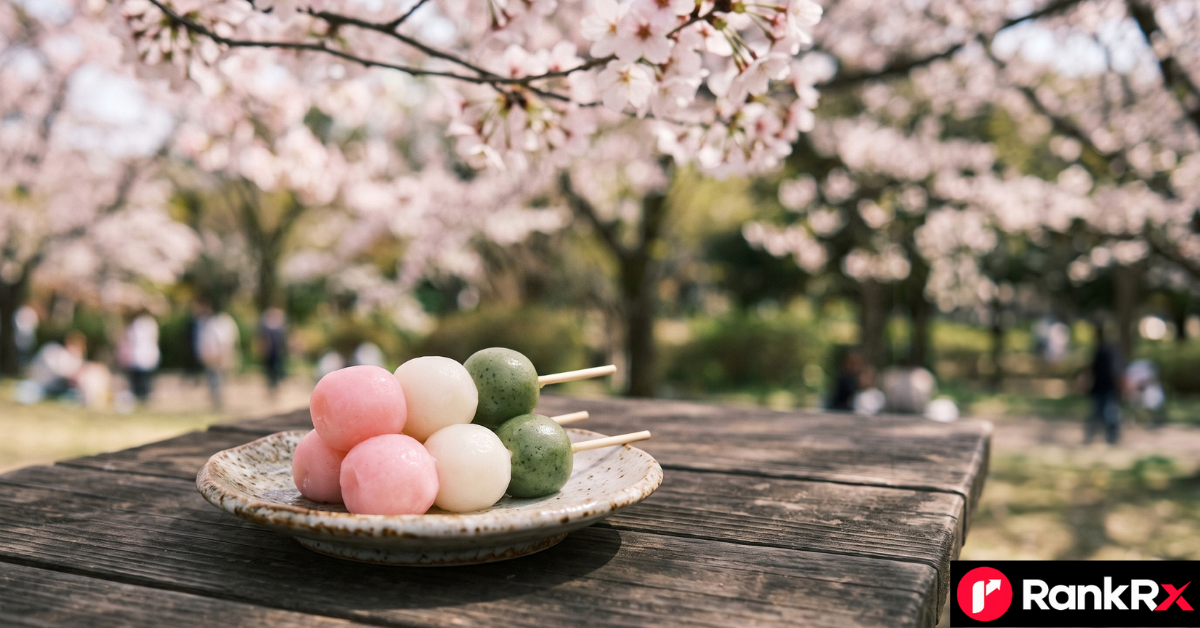

Picture a picnic blanket under a cherry tree, petals drifting into your tea, and a skewer of soft, chewy dumplings in your hand. That small scene explains why one simple sweet has become a symbol of spring in Japan.
Hanami dango is the pink, white and green skewered treat people eat while admiring cherry blossoms. It looks cheerful, tastes gentle, and carries a bit of cultural meaning that most quick guides skip. This article covers what it is, where the tradition comes from, what the colors represent, how to make it at home, and how to avoid the usual mistakes.
Disclaimer: This article is for general information and cooking guidance. Recipes, ingredients and availability vary, and allergen and safety needs differ from person to person. Check labels and consult a qualified professional if you have dietary or health concerns. Content strategy results vary by site, niche and competition.
One note on honesty before we start. Food history often mixes fact with folklore, so where origins are uncertain, I will say so instead of presenting a nice story as settled truth.
What Is Hanami Dango?
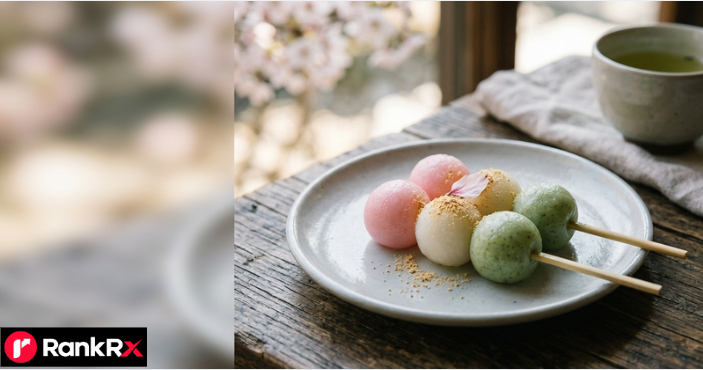
The name breaks down easily. “Hanami” means flower viewing, and in practice it almost always refers to enjoying cherry blossoms in spring. “Dango” is a Japanese dumpling made from rice flour. Put them together and you get a dumpling made for blossom season.
The classic version has three round dumplings on a wooden skewer, in three colors. The order most people describe is pink at the top, white in the middle and green at the bottom.
The texture is the main point. Dango is soft and springy, and it is meant to be chewed slowly. Some people compare it to mochi, but it is usually a little firmer and less stretchy. The flavor is mild and lightly sweet, so it pairs well with green tea instead of competing with it.
The Story Behind the Tradition
Flower viewing in Japan is a very old custom. Over the centuries it grew from an aristocratic pastime into a popular seasonal event. Today, families, friends and coworkers gather in parks with food and drinks, often reserving a spot early in the day.
READ MORE: Anko What the Brand Actually Is and Whether It’s Worth Buying
Dango has its own long history in Japan as a simple, portable sweet. Because it sits on a stick, it is easy to eat outdoors without plates or cutlery. That practicality is probably a big reason it became a favorite blossom-season snack.
You may hear that the three-color version dates back to a famous historical blossom party in the late 1500s. That story is popular, but I could not verify it as a proven origin, so treat it as a common legend and not a documented fact. What is well known is that the treat is now firmly linked with spring and with the flower-viewing season.
There is also a well-known Japanese saying, roughly “dumplings over flowers.” It teases people who care more about the snacks than the scenery. Anyone who has seen a crowd at a blossom party will understand why it stuck.
What the Three Colors Mean
The colors look pretty, and they are often explained with seasonal symbolism. Keep in mind that these are popular interpretations, not a single official rule. Different regions and shops tell the story slightly differently.
| Color | Common interpretation | Typical ingredient for color |
|---|---|---|
| Pink | Cherry blossoms and the arrival of spring | Food coloring, or a natural red or sakura-based coloring |
| White | Snow, or the winter that has just ended | Plain rice dough |
| Green | New growth, or the summer to come | Mugwort or matcha powder |
Read from top to bottom, the skewer is often described as a small picture of the seasons moving from spring through winter to summer. Some people prefer a simpler explanation: pink for blossoms, white for purity and green for fresh leaves. Either version works, so use whichever fits your writing or your table conversation.
What Is It Made Of?
The base is simple, which is part of its charm. The core ingredients are:
- Rice flour: usually a Japanese flour made for dango, or a mix of two rice flours for texture.
- Water: added gradually to form a smooth dough.
- Sugar: a small amount for mild sweetness.
- Coloring: for the pink and green dumplings.
Rice flours differ, and the choice affects the result. A firmer flour gives a bouncier chew. A softer, glutinous flour gives a more tender, stretchy bite. Many home cooks combine the two to find a balance they like.
For the green color, mugwort is the traditional herb in many regional sweets and has an earthy, slightly herbal flavor. Matcha is a common modern alternative that is easier to find outside Japan. For the pink color, a few drops of food coloring are the simplest option, though some cooks use natural powders.
The dumplings themselves are usually plain. Some versions come with a light sweet syrup or a sweet glaze, but the basic blossom-season skewer is often served without any sauce.
What Does It Taste Like?
If you have never tried it, expect something subtle. The dumplings taste mostly of soft rice with a whisper of sugar. The green one may taste slightly earthy or grassy. The pink one usually tastes the same as the white unless a flavored powder is used.
This mildness is deliberate. Blossom-season snacks are meant to sit in the background while you enjoy the flowers, the company and the tea. If you expect a strongly flavored dessert, you may be disappointed. If you enjoy chewy textures and gentle sweetness, you will probably like it.
How to Make Three-Color Dango at Home
You do not need special equipment. A pot, a bowl, a few skewers and some ice are enough. These quantities are approximate, so adjust the water slowly, because different rice flours absorb liquid differently.
Ingredients (about 3 to 4 skewers):
- 200 g dango flour, or a mix of two rice flours
- About 180 to 200 ml water, added gradually
- 1 to 2 tablespoons sugar
- A few drops of pink food coloring
- About half a teaspoon of matcha or mugwort powder
- Ice water for cooling
Steps:
- Mix the flour and sugar in a bowl.
- Add water a little at a time, stirring until you get a smooth, soft dough about the softness of an earlobe.
- Divide the dough into three equal parts.
- Leave one part plain. Knead the pink coloring into the second and the green powder into the third.
- Roll each part into small balls of equal size. Twelve balls make four skewers of three.
- Bring a pot of water to a boil and drop the balls in.
- When they float, cook for a further two minutes.
- Move them straight into ice water for a minute to set the texture.
- Drain, then thread three balls onto each skewer in pink, white and green order.
That is the whole process. The main skill is getting the dough to the right softness and keeping the balls the same size so they cook evenly.
Tips for Better Texture
Texture makes or breaks this treat. A few simple habits help:
- Add water slowly. It is easy to add more, but hard to fix a dough that is too wet.
- Knead until smooth. Lumps lead to uneven dumplings.
- Keep the balls the same size. Different sizes cook at different speeds.
- Do not skip the ice bath. It firms the surface and gives a better chew.
- Serve the same day. Rice-based sweets tend to stiffen as they sit.
- Cover leftovers. Dry air toughens the surface quickly.
If your dumplings turn out hard, the dough was probably too dry or they were stored too long. If they collapse, the dough was likely too wet. hanami dango.
Similar Japanese Sweets Worth Knowing
Dango is a broad family, and it is easy to mix up the varieties. hanami dango.
| Sweet | What it is | Typical topping or feature |
|---|---|---|
| Three-color (spring) dango | Pink, white and green dumplings on a skewer | Usually plain, seen in blossom season |
| Mitarashi dango | Dumplings with a sweet-savory soy glaze | Sticky glaze |
| Anko dango | Dumplings with sweet red bean paste | Bean paste |
| Kinako dango | Dumplings coated in roasted soybean flour | Nutty powder |
| Mochi | Pounded glutinous rice cake | Softer and stretchier |
If you write or talk about these sweets, keep the distinctions clear. Readers often search for one type and land on a page that treats them all as the same thing. hanami dango.
How to Enjoy It Like a Local
A few simple habits make the experience feel authentic:
- Pair it with green tea. The bitterness balances the sweetness.
- Eat it fresh. Buy it the same day if you can.
- Eat it outdoors if you can. A park, a garden or even a balcony is enough.
- Take your time. The chew is part of the pleasure. hanami dango.
- Share. Blossom viewing is a social occasion. hanami dango.
You do not need to be in Japan to do this. Any spring picnic, a tea gathering at home or a themed dessert table works well. hanami dango.
Where to Buy It
In Japan, you can find seasonal dango in supermarkets, convenience stores, traditional sweet shops and stalls near popular blossom spots. The best-known outlets tend to be busiest in peak season. hanami dango.
Outside Japan, your options are more limited:
- Japanese grocery stores: sometimes stock packaged or chilled versions in spring.
- Specialty bakeries and cafes: some make small seasonal batches.
- Online shops: availability varies by country and shipping rules.
- Your own kitchen: often the most reliable option. hanami dango.
Availability and prices change with the season and the country, so check current listings locally instead of relying on a fixed list. hanami dango.
Storage and Safety
Dango is best eaten fresh. If you need to store it: hanami dango.
- Cover it well and keep it in a cool place for a short time.
- Avoid refrigerating longer than necessary, because the texture hardens.
- If it has firmed up, a brief gentle warm-up can help, though the texture will rarely match a fresh batch.
Safety matters too. Chewy rice sweets can be a choking risk, especially for small children and older adults. Cut them into smaller pieces for young children, and supervise while they eat. Also check labels for allergens if you buy packaged versions, since some contain soy, sesame or other ingredients. hanami dango.
Writing About This Topic: A Quick Seasonal Content Lesson
Since this article sits on a site about content and search, here is the practical takeaway. Seasonal topics like this behave differently from evergreen ones. hanami dango.
Search interest in a spring food topic typically rises in the weeks around the season it belongs to. That is a general pattern, not a promise, and it varies by country and year. You can check the pattern yourself with Google Trends.
A few practical points: hanami dango.
- Publish early. Give a page time to be discovered before the peak.
- Refresh yearly. Update dates, images and facts instead of publishing a new page each year.
- Match intent. Readers of this topic want meaning, images and simple recipes, not a wall of text.
- Use real experience. First-hand tasting notes, your own photos and honest test results build trust.
- Be careful with origins. Repeating a folk story as fact can hurt credibility if a reader checks it.
Results vary by site, niche and competition, and no seasonal topic guarantees traffic. But a well-timed, honest and useful page has a better chance than a thin one. hanami dango.
Common Mistakes to Avoid
Mixing up the varieties. Three-color dango, mitarashi dango and mochi are not the same thing.
Treating legends as facts. Tell the story, but mark it as a popular account when the evidence is thin.
Using too much water. A wet dough leads to sticky, shapeless dumplings.
Skipping the ice bath. Without it, the texture is often softer and less springy.
Letting it sit for days. Rice-based sweets stiffen quickly. hanami dango.
Overdoing the food coloring. A few drops go a long way, and strong colors can look artificial.
Ignoring choking risk. Serve appropriately for children and older adults.
Expecting a strong flavor. Mild sweetness is the point. hanami dango.
Conclusion
Hanami dango is a small, simple sweet with a lot of seasonal meaning. Three chewy dumplings, three colors, one skewer and a cup of tea are enough to capture the spirit of blossom season. hanami dango.
READ MORE: Anko Uguisu Who She Is and Why Call of the Night Fans Can’t Stop Talking About Her
If you want to try it, start with the home recipe above, keep the balls even, and serve them fresh. If you are writing about it, stay honest about the origins, keep the varieties clear and add real tasting notes so readers can trust what you say. hanami dango.
FAQs
Is hanami dango only eaten in spring?
It is most closely linked to spring and cherry blossom season, so that is when you will see it most often in shops. You can still make it at home at any time of year. hanami dango.
What do the colors mean?
The most common explanation is pink for cherry blossoms, white for snow or purity, and green for fresh leaves or summer. These are popular interpretations, not one official rule.
What is the difference between dango and mochi?
Both are made from rice, but mochi is made from pounded glutinous rice and is usually softer and stretchier. Dango is typically made from rice flour dough and is a little firmer.
Can I make it without special flour?
Regular rice flour can work, but the texture may differ from the traditional result. A flour made for dango, or a mix of two rice flours, usually gives a better chew.
How long does it stay fresh?
It is best eaten the same day. Rice-based sweets tend to harden as they sit, especially in the refrigerator.
Is it suitable for children?
Yes with care. The chewy texture can be a choking risk for very young children, so cut it into small pieces and supervise. hanami dango.
For more updates visit: rankrx.co.uk