
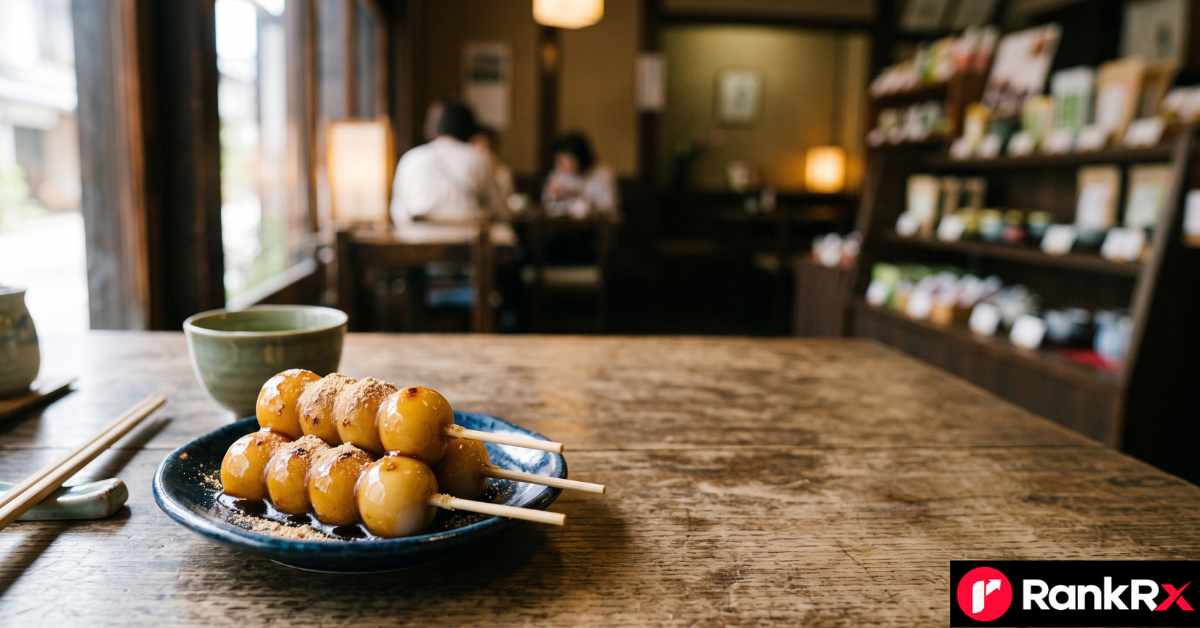

Here is a quirk of local search that catches many small businesses out: most places that sell dango are not dango shops. They are Japanese grocers with a chilled dessert shelf, cafés with a seasonal special, restaurants with a skewer on the dessert menu, or bakeries that make a few batches on Fridays.
Yet when someone types dango near me, they expect the map to know exactly who has it. If your business sells one item among many, you have to work harder to be understood. This guide covers how local search treats product-level queries, what the results look like, and what a grocer, café owner or food blogger can do to get found, without tricks.
Disclaimer
This article is for general information only. Local search results are personalised and change often, and SEO results vary by business, location and competition, and nothing here is a guarantee. Food labelling, allergen and advertising rules differ by country, so check local requirements. For business-specific strategy or compliance questions, consult a qualified professional.
An honest note first: “near me” results are personalised by location and device, so nobody can promise you a place on the map. Results vary by business, area and competition, and SEO has no guarantees.
What “Dango Near Me” Really Means
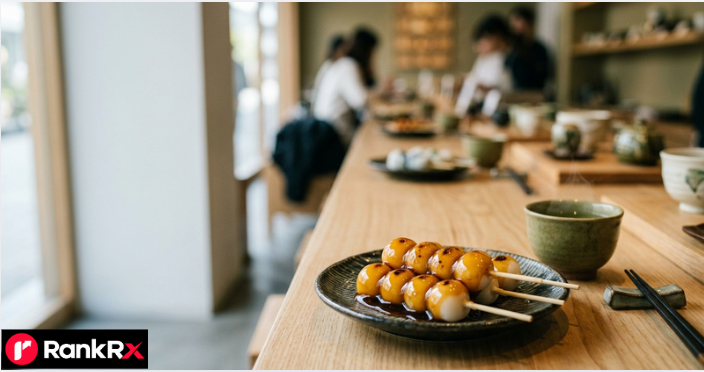
A short product search hides several different needs. Before you improve anything, work out which one you serve.
| Likely need | What the person is picturing | What helps them |
|---|---|---|
| Fresh from a shop | Warm or same-day skewers from a counter | Clear hours, current menu, photos |
| Packaged or frozen | A pack from a grocery shelf | Stock confirmation and store location |
| Delivery | Something brought to the door today | Visible delivery options and areas |
| A specific kind | A particular flavour or style | Named varieties on the menu |
| Dietary needs | Vegan, gluten-free or allergen-aware options | Accurate, specific information |
| Seasonal or festival | A traditional spring or autumn treat | A dated, seasonal page |
The vocabulary problem
Dango is a family of rice dumplings, not one product. Sources describe varieties such as mitarashi (sweet soy glaze), anko (sweet red bean), kinako (toasted soybean flour), hanami (the pastel spring version) and tsukimi (the moon-viewing version). Some searchers know these names and some do not. Some type “mochi,” “Japanese sweets” or “rice dumplings” instead. Your pages need to speak to all of them in plain words.
What the Search Results Show
I looked at what appears for this kind of query, and the mix is wider than you might expect.
Delivery and retail product pages
Grocery delivery and marketplace pages show up for packaged dango, with listings from online Asian grocers and delivery apps. One page states plainly that the seller has no physical stores and delivers online. These pages compete with local shops on the same search.
Review-platform city lists
Yelp lists dated through 2026 show dango results that include Japanese markets, bakeries, cafés, restaurants and even food stalls. The snippets mention things like a vegan and gluten-free hanami dango at a café and a market described as a maze of Japanese goods.
Names can mislead
One result is a business whose name includes “dango” but whose reviews talk about fried chicken and bubble tea combos, and a yakitori restaurant appears because it serves a savoury chicken ball sometimes called dango. Search engines match words, so a business can show up for a query it does not really serve, and readers can arrive confused.
Guides explain where to buy
General guides list the usual places: Japanese markets and food halls, Asian grocery stores with frozen or packaged options, online retailers and Japanese dessert shops and cafés. That tells you the competing set is broad.
What this means for you
If you sell dango, you are competing with grocers, apps, cafés and restaurants at the same time. Your best chance is to be clear, specific and current about what you offer.
6 Best Essential Local SEO Tips for Selling Dango
Tip 1: Say which kind of dango you sell, and how
Start by deciding what you actually offer, then say it plainly everywhere.
- Fresh daily or on certain days? State the days.
- Made in-house or bought in? Be honest about it.
- Packaged or frozen? Name the brands you stock only if they are really on the shelf.
- Pre-order available? Explain how.
- Delivery or collection only? Say which.
Readers use this to decide whether the trip is worth it, and search engines use the same clear wording to match your pages to the right searches.
Tip 2: Put the item on the map, not just the business
For a business that sells many things, your map listing needs to carry the dango detail.
On your Google Business Profile and other listings:
- Keep your category honest. Choose categories that truly describe your business, from the options available. Do not change your main category to “dessert shop” just to chase this search.
- Add products or menu items with names, short descriptions and, where appropriate, prices.
- Upload original photos of the actual dango you sell, not stock images.
- Update hours and holiday hours promptly.
- Use attributes and services only where they are true, such as takeaway or delivery.
- Check other platforms, such as Yelp, Apple Business Connect and Bing Places, for the same details.
Photos of dango help a lot. Customers cannot easily judge a skewer from a text description.
Tip 3: Map the vocabulary honestly
People search with different words, and a short, friendly explainer helps all of them.
| What people might type | What your page can do |
|---|---|
| dango | Explain in one line what it is |
| mitarashi dango, anko dango, kinako dango | Name each variety you sell, with a short description |
| hanami dango, tsukimi dango | Explain the seasonal versions and when you offer them |
| mochi, rice dumplings, Japanese sweets | Mention these terms naturally where they fit |
| Japanese script | Include the original characters alongside the romanised name if it suits your customers |
The key word is naturally. Do not stuff every variation into every paragraph. Write for a curious customer who is new to the product, and the variations will appear where they belong.
If your business name contains “dango” but you sell something else, make that obvious on your website and listings, so people are not misled.
Tip 4: Treat freshness and stock as part of SEO
Fresh dango is perishable, and it sells out. Few things frustrate a local searcher more than arriving to an empty shelf.
Good habits:
- Show availability honestly, such as “made fresh Friday to Sunday” or “sells out by early afternoon.”
- Update stock notes when you can. A short post or note on your profile is better than silence.
- Offer pre-orders where it suits your operation. dango near me.
- Do not list items you do not have. An out-of-date menu costs trust.
- Look into Google’s current options for local product listings, since programmes for showing in-store availability exist but their names, requirements and eligibility change. Read the official documentation first.
Accuracy here protects your reputation more than any ranking tactic. dango near me.
Tip 5: Build dated seasonal pages
Dango has natural seasons. Spring cherry blossom viewing and autumn moon viewing both come with traditional versions, and local festivals add more. dango near me.
A simple way to use that:
- Create one seasonal page per occasion, at a stable address, such as a page for the spring version.
- Update it every year instead of publishing a new page each time. dango near me.
- Show dates clearly, including start and end dates for availability. dango near me.
- Explain the tradition briefly in your own words, with links to credible sources where useful.
- Announce it on your profile, with photos and any pre-order details. dango near me.
Because the page stays at the same address, it builds history, and readers see accurate, current dates.
Tip 6: Balance delivery apps with your own channels
Delivery apps and marketplaces can bring customers, and they also compete with you in search.
| Channel | Benefits | Watch out for |
|---|---|---|
| Delivery apps | Reach and convenience | Fees, less control over presentation, inconsistent details |
| Your own website or ordering | Control, customer relationship, better margins | You have to promote it |
| Map and review profiles | Discovery and trust | Needs regular updating and review management |
| Social media | Visuals and seasonal buzz | Time-consuming and unpredictable |
Make sure the name, address, hours and menu match across every channel. Inconsistencies confuse customers and weaken trust signals. dango near me.
Get allergen and dietary information right. Many dango sauces and coatings contain soy, wheat or other common allergens depending on the recipe, so publish accurate details and follow the food labelling and allergen rules where you operate. Only claim “vegan” or “gluten-free” if you can verify it, including cross-contact practices. dango near me.
If Dango Is One Item Among Many
Grocers, cafés and restaurants often sell dango as a small part of a larger range. A few extra steps help.
- Give dango its own mention on your menu or product page, not just a line in a long list. dango near me.
- Add a short caption under photos so customers know what they are looking at. dango near me.
- Train staff to answer basic questions: what flavours, whether it is fresh, whether it contains common allergens.
- Ask for reviews that mention the item, politely and without incentives. Do not pay for reviews or offer rewards for positive ones, which platforms prohibit. dango near me.
- Reply to reviews that mention dango, so future searchers see engagement.
If You Are a Food Blogger
A city guide can rank for this kind of search, but only if readers can trust it. dango near me.
| Do | Avoid |
|---|---|
| Visit and taste what you recommend, and say so | Listing places you have not been to |
| Verify addresses, hours and stock before publishing | Copying details from another site |
| Explain the varieties and what to expect | Assuming readers know the terms |
| Show original photos with dates | Using manufacturer or stock images |
| Disclose free food and paid partnerships | Hiding commercial relationships |
| Update the guide when places open or close | Leaving old lists live |
Local roundups age quickly, so add a clear “last checked” date. dango near me.
A Simple 30-Day Plan
| Week | Focus | Actions |
|---|---|---|
| 1 | Clarity | Decide what dango you sell and how. Update your profile details and photos. |
| 2 | Website | Add a dango section or page with varieties, availability and ordering. |
| 3 | Consistency | Align details across delivery apps, review sites and directories. Reply to recent reviews. |
| 4 | Seasonal and tracking | Plan one dated seasonal page. Set up tracking in your profile insights and Search Console. |
After the month, check which actions customers took and where the gaps are. dango near me.
Tools That Help
| Tool | Best for | Notes |
|---|---|---|
| Google Business Profile | Map listing, products and insights | Free; essential |
| Google Search Console | Website queries and clicks | Free |
| Yelp, Apple Business Connect, Bing Places | Wider discovery and consistency | Each has its own rules |
| Delivery app dashboards | Managing menus and availability | Check details regularly |
| A simple spreadsheet | Tracking listings, hours and stock notes | Cheap and effective |
| A listing checker | Spotting inconsistent details | Verify results manually |
Risks and Limits
- Local results are personalised, so no one can rank first for everyone.
- Competition is mixed, with grocers, apps, cafés and online retailers all appearing.
- Perishable stock makes accuracy harder and mistakes more visible.
- Allergen and dietary claims carry responsibility, and errors can harm people.
- Platform rules can change, and listings can be edited or suspended.
- Guidelines evolve, and I have not verified the specifics of recent 2026 updates here.
- No guarantees. A tidy profile helps but does not promise a position. dango near me.
For a small business, a few well-kept basics usually beat a long list of half-finished tactics.
Common Mistakes to Avoid
- Changing your business category to chase a keyword.
- Listing dango you do not actually have.
- Leaving seasonal items on your menu after they end.
- Inconsistent details across your website, map listing and delivery apps.
- Stock photos only. dango near me.
- Vague allergen information or unverified dietary claims.
- Buying, faking or incentivising reviews. dango near me.
- Keyword stuffing with every spelling and variation.
- Using an ineligible address to appear local. dango near me.
- Expecting guaranteed rankings. SEO is probabilistic, and honest expectations lead to better decisions.
Conclusion
The search dango near me looks simple, but behind it sits a mixed field of shops, markets, apps and cafés, and a product whose names and seasons confuse many newcomers. The businesses that tend to do well are the ones that are clear about what they sell, show it with real photos, keep stock and hours honest, and speak in words their customers actually use. dango near me
READ MORE: Mochi Donuts Near Me 6 Best Essential Local SEO Tips
Start with one change this week: update your listing with accurate photos and availability. Then build outward with a clear menu page, consistent details across channels and a dated seasonal page. Measure what customers do, and keep it current. dango near me.
FAQs
What is dango?
Dango is a Japanese sweet made from rice flour, usually shaped into small balls and often served on a skewer. Common varieties include mitarashi, anko, kinako, hanami and tsukimi, each with different coatings or seasonal associations.
How do I get my shop found for product searches like this?
Complete your business profile, add the product with real photos, keep hours and availability accurate, use consistent details across platforms and describe your varieties in plain words. Local results are personalised, so no position is guaranteed. dango near me.
Should I put “dango” in my business name?
Only if it is part of your real name and describes what you do. Adding keywords to a name can break platform guidelines, and a name that does not match your products can confuse customers.
How should I handle stock that sells out?
Say honestly when items are made and when they usually run out, update your profile when you can, and offer pre-orders if they suit you. Do not list items you do not have.
Can I call my dango vegan or gluten-free?
Only if you can verify it, including cross-contact practices, and follow the labelling and allergen rules where you operate. When unsure, take professional advice or leave the claim out. dango near me.
Are delivery apps good for local visibility?
They can bring customers, but they also compete with you and give you less control. Keep your details consistent across apps and your own channels, and treat apps as one part of the mix.
For more updates visit: rankrx.co.uk