


Measure a bag once and it looks fine. Measure it again with the wheels and the top handle, and suddenly it is two inches too tall. Travellers hit this problem at the gate every day, and it explains why one short query keeps pulling in so much search traffic: american airlines carry on size.
For anyone who writes about travel, this keyword is a tidy example of how policy content succeeds or fails. The numbers are simple, but the details around them (what counts as part of the bag, which fare you bought, who gets exceptions) are where pages go wrong. This guide walks through what the search results show and how to build a page that is accurate, useful and honest about uncertainty.
Disclaimer
This article is for general information and content-strategy illustration only. Airline and security policies change, so always confirm current rules on the airline’s and the relevant security agency’s official websites before you travel. SEO results vary by site, niche, location and competition, and nothing here is a guarantee. For site-specific strategy, consult a qualified professional.
A quick note first: airline rules change, and I am not American Airlines. The figures below are reported by third-party guides and must be checked against the airline’s official page on the day you publish. Results vary by site, niche and competition, and SEO has no guarantees.
What the Search Results Agree On
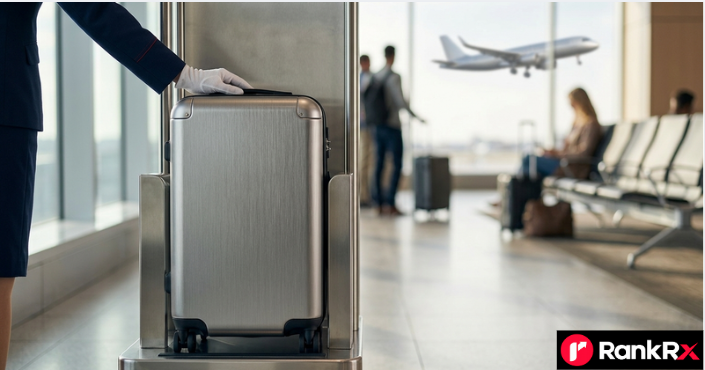
When many pages say the same thing, that is a good sign, though not proof. Across the guides I reviewed, the core numbers line up.
| Item | Reported limit | Where it goes |
|---|---|---|
| Carry-on bag | 22 x 14 x 9 inches (about 56 x 36 x 23 cm) | Overhead bin |
| Personal item | 18 x 14 x 8 inches (about 45 x 35 x 20 cm) | Under the seat in front of you |
| Weight | Several guides say there is no specific weight restriction for carry-on or personal item | Not applicable |
Several guides also state that the carry-on limit includes wheels and handles, and one notes that gate agents check bags with a sizer at the departure gate.
Treat this table as a starting point for your own verification, not as a final answer. The airline’s own page is the primary source.
The Detail Most Pages Get Wrong: How Size Is Measured
A frequent source of confusion is the difference between a suitcase’s advertised size and its real outside size. One guide points out that a bag sold as a “20-inch carry-on” often describes the case body, not the full size once wheels and top handles are added.
That is a genuinely useful point for readers, because it explains why a bag labelled as cabin-sized can still fail a sizer. If your page explains this clearly, you answer a question the reader did not know to ask.
A simple way to explain it
Tell readers to measure three things on the outside of the packed bag: height from the floor to the top of the handle, width at the widest point, and depth, including any bulging pockets. If any of those numbers is over the limit, the bag may be gate-checked.
The Conflict: What About Basic Economy?
Here is where the search results split, and where a careful publisher can add real value.
| What some pages say | What other pages say |
|---|---|
| Basic Economy allows only a personal item under the seat, with no overhead bin access, and mentions a gate-check fee for larger bags | A free carry-on bag and a personal item are included on all fare types, including Basic Economy |
| Exceptions may apply for AAdvantage elite members, eligible credit cardholders and Oneworld elites | Comparisons say American is more generous than some competitors that limit Basic Economy to a personal item |
Both claims appear in recent-looking guides. They cannot both be right at the same time. One of them may be out of date, may apply to a specific route or date, or may simply be wrong. I cannot tell which from third-party pages alone.
What a trustworthy page does here
- Does not pick a side without evidence. Guessing wrongly could cost a reader a fee.
- Says plainly that sources disagree on the Basic Economy rule. american airlines carry on size.
- Points to the airline’s fare rules page as the deciding source, with a link.
- Gives the safe advice. If a traveller is unsure, a bag within the personal item size avoids the risk entirely.
- Notes possible exceptions such as elite status or co-branded card benefits, and tells readers to check their own account. american airlines carry on size.
That one honest paragraph can be worth more than a hundred copied lists.
6 Best Essential SEO Tips for Carry-On Size Pages
Tip 1: Put the answer first, then the caveat
Searchers want a number, not a story. Lead with the figures, in plain words, then immediately add the one caveat that matters, such as the fare-type question. american airlines carry on size.
A good opening block might say the carry-on limit is reported as 22 x 14 x 9 inches including wheels and handles, the personal item limit is 18 x 14 x 8 inches, and that Basic Economy rules should be checked on the airline’s site because guides disagree. american airlines carry on size.
This structure suits featured snippets and AI-generated answers, since it gives a short, quotable summary. Google decides what to display, so there are no guarantees, but a clear answer-first layout gives your page the best chance of being understood. american airlines carry on size.
Tip 2: Explain measurement, not just limits
Most competing pages stop at the numbers. You can stand out by showing readers how to check their own bag.
Include:
- A short measuring routine using a tape measure. american airlines carry on size.
- A note on wheels, handles and pockets, which count toward the outside size.
- A warning about advertised sizes versus actual outside dimensions.
- A tip about soft bags, which can be squeezed, versus hard cases, which cannot.
- A reminder to measure when packed, since a full bag bulges.
If you create your own simple diagram showing where to measure, you also gain an original asset. Use your own graphics rather than copying images from other sites. american airlines carry on size.
Tip 3: Treat conflicting rules as content, not a problem
Most travel sites hide uncertainty because it feels less authoritative. In practice, readers trust honest pages more, especially when money is involved. american airlines carry on size.
A reliable pattern:
- State what is consistent across sources.
- State what is disputed and why it matters.
- Link to the official source for the disputed point.
- Give a safe default that works whichever rule applies.
- Add a “last verified” date. american airlines carry on size.
This approach also protects you. If a rule changes, you have already told readers to confirm it.
Tip 4: Build a hub structure and avoid thin airline pages
It is tempting to publish one near-identical page for every airline, swapping in different numbers. That approach tends to produce thin, repetitive content, and it competes with your own pages. american airlines carry on size.
A more sustainable structure:
| Page type | Purpose | Notes |
|---|---|---|
| Hub page | A general guide to carry-on rules and how to measure | Links to each airline page |
| Airline pages | One carefully verified page per airline you actually cover | Each needs unique, useful details |
| Comparison page | Side-by-side reference of verified figures | Only include airlines you have checked |
| Update log | A short note on what changed and when | Builds trust |
If you already publish a page on another airline’s baggage rules, link the two and make sure each has a distinct angle. Search Console will show whether your own pages are competing for the same queries. american airlines carry on size.
Tip 5: Add practical value readers can use at the airport
People searching this phrase are often one step from packing or checking in. Practical help makes your page worth bookmarking. american airlines carry on size.
- A pre-flight checklist readers can screenshot
- What to do if a bag is too big: check it, and expect the airline’s current checked-bag charges to apply
- Which bag types tend to work: soft-sided bags often squeeze into tight spaces better than hard cases
- A reminder about security rules, such as the standard limits on liquids, which are set by the security agency, not the airline, and should be checked on the official security page
- Special items: point readers to the airline’s page rather than guessing
Write only what you can support. If you have flown with the airline and observed something, label it as personal experience rather than as a rule. american airlines carry on size.
Tip 6: Build trust signals and a maintenance routine
Because this content affects what people pay and carry, trust matters more than in most entertainment topics.
| Area | What to do | Why it matters |
|---|---|---|
| Authorship | Show a named author and brief bio | Supports accountability |
| Sources | Link to the airline’s official baggage and fare pages | Lets readers verify |
| Dates | Show published and last-verified dates | Readers judge freshness |
| Disclosure | Label affiliate links, such as luggage recommendations | Protects reader trust |
| Corrections | Offer a simple way to report errors and act on reports | Keeps content accurate |
| Structure | Short answer, table, then detail | Works well on mobile |
| Structured data | Consider Article markup where suitable | Helps search engines understand the page |
| FAQ markup | Check current Google documentation first, since FAQ rich results have been limited | Avoids wasted effort |
Then set a schedule. For a high-traffic policy page, a monthly or quarterly check against the official site is reasonable, plus an immediate check whenever the airline announces a change. american airlines carry on size.
A Reusable Verification Workflow
| Step | Action | Output |
|---|---|---|
| 1 | Open the airline’s official carry-on, personal item and fare pages | Primary figures with page links |
| 2 | Compare with two or three reputable third-party guides | A list of agreements and disagreements |
| 3 | Mark any disputed points | A short “what to confirm” note |
| 4 | Write the answer-first summary | A concise, quotable intro |
| 5 | Add measuring guidance and a checklist | Practical value |
| 6 | Add a visible last-verified date and your name | Trust signals |
| 7 | Publish and request indexing in Search Console | Faster discovery |
| 8 | Recheck on a schedule and log changes | A page that stays current |
The most important step is the first one. Everything else depends on starting from the airline’s own words.
Tools That Help
| Tool | Best for | Notes |
|---|---|---|
| Airline’s official baggage pages | The primary source | Always cite and link |
| Security agency pages | Screening rules | Link instead of copying |
| Google Search Console | Seeing queries and pages | Free; essential |
| Ahrefs, Semrush or Moz | Keyword and competitor research | Volume figures are estimates |
| A crawler such as Screaming Frog | Spotting duplicate titles and thin pages | Useful for audits |
| Page change monitors | Alerts when an official page changes | Helps catch policy updates |
Risks and Limits
- Rules can change quickly, sometimes without much notice.
- Sources disagree, even on points that seem simple. american airlines carry on size.
- Competition is intense. Airlines, big travel publishers and aggregators all target this query.
- Low differentiation. The numbers are public, so your edge comes from clarity, honesty and usefulness.
- Reader consequences. A wrong figure can mean a fee or a repack at the gate. american airlines carry on size.
- No guarantees. A careful page can still struggle against larger brands, and search features may change how list-style answers appear. american airlines carry on size.
For a small site, a few carefully maintained pages are usually a safer bet than dozens of untended ones.
Common Mistakes to Avoid
- Copying figures from other blogs without checking the airline.
- Ignoring how size is measured. Wheels, handles and bulging pockets matter.
- Stating a disputed rule as fact. If sources disagree, say so.
- Leaving old pages untouched after a policy change.
- Publishing thin, near-identical airline pages. american airlines carry on size.
- Hiding affiliate links or pushing luggage products over helpful advice.
- Overusing the keyword in headings and body text. Use it where it reads naturally.
- Skipping the date. Readers need to know when you last checked. american airlines carry on size.
- Promising rankings. SEO is probabilistic, and honest expectations lead to better decisions.
Conclusion
The query american airlines carry on size looks like a simple lookup, but the best answers go beyond the numbers. They explain how size is measured, flag the points where sources disagree, point readers to the airline for the final word, and show exactly when the page was last checked. american airlines carry on size.
READ MORE: Delta Carry On Size 7 Costly Mistakes to Avoid
That combination of clarity, honesty and maintenance is what readers trust, and it is also what makes a page hard to replace. Start from the official source, say what you know and what you do not, add practical help, and keep the page current. american airlines carry on size.
FAQs
What is the carry-on size limit for American Airlines?
Several guides report 22 x 14 x 9 inches, including wheels and handles. Confirm the current figure on American Airlines’ official baggage page before you travel.
What is the personal item size?
Guides commonly report 18 x 14 x 8 inches, and the item must fit under the seat in front of you. Check the airline’s page for the latest figure.
Can I bring a carry-on in Basic Economy?
Sources disagree. Some say Basic Economy includes only a personal item, with exceptions for certain elite members and cardholders. Others say a carry-on is included on all fares. Check the airline’s fare rules for your ticket before you pack. american airlines carry on size.
Do wheels and handles count toward the size limit?
Several guides say yes. Measure the outside of the bag, including wheels, handles and any bulging pockets, and measure it when packed. american airlines carry on size.
Is there a weight limit for carry-on bags?
Some guides say there is no specific weight restriction, but you still need to be able to lift your bag into the overhead bin yourself. Confirm on the airline’s site.
How often should a baggage policy page be updated?
For a busy page, a regular check every month or quarter is a sensible starting point, plus an immediate review when the airline announces changes. Update the verification date only after you have actually rechecked.
For more updates visit: rankrx.co.uk