
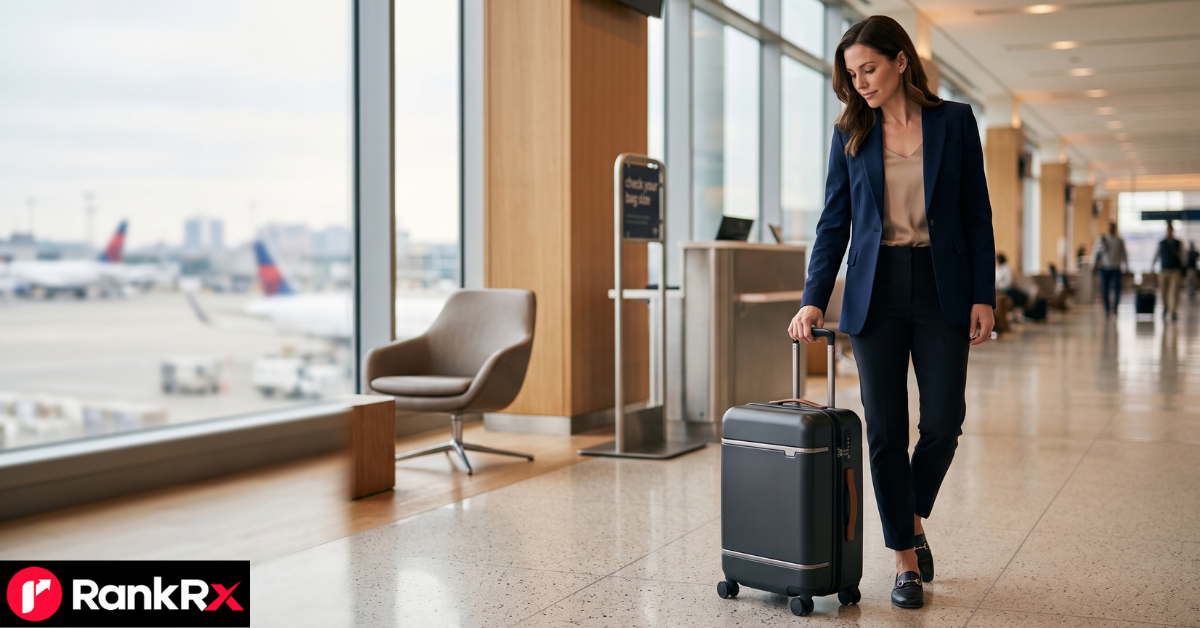

You’ve found the perfect bag, packed it neatly and arrived early. Then the gate agent points at the metal sizer, your bag sticks out by two centimetres, and you’re handed a card reader.
Getting carry on luggage size wrong is one of the most common and most avoidable travel annoyances. The rules aren’t hard to understand. They’re just scattered across airline websites, fare pages and product listings that don’t always agree with each other.
Disclaimer
This article is for general information only. Airline baggage policies, security rules and airport procedures change often and vary by route and fare. Always check the latest rules with your airline and airport before travelling. Results vary, and we can’t guarantee any bag or packing method will meet every airline’s requirements.
This guide pulls it together. You’ll learn what the typical dimensions look like, why they differ, how to measure properly, and how to buy and pack a bag that passes the check. It’s written with UK travellers in mind, but the logic applies on most routes.
Rules change often and depend on your airline, fare and aircraft. Treat every figure here as a guide and confirm it on your booking before you fly.
What Is the Standard Carry On Luggage Size?
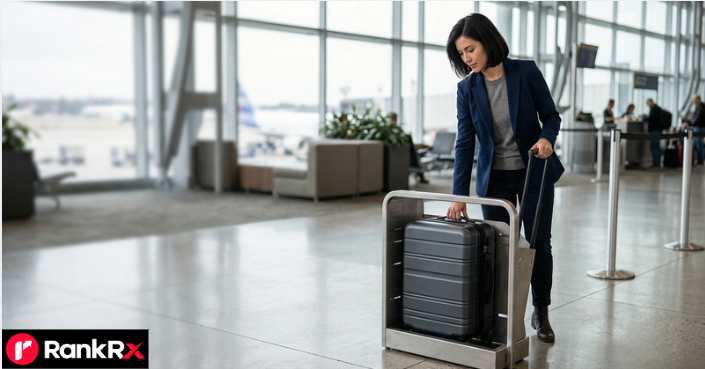
There is no single global standard. Each airline sets its own limits, and some set different ones for different fares.
That said, many airlines cluster around similar numbers for a full cabin bag. A common range is roughly 55 x 40 x 20 cm up to about 56 x 45 x 25 cm, often with a weight limit somewhere between 7kg and 10kg. Some carriers go bigger, and some low-cost fares go much smaller.
READ MORE: Faye Travel Insurance Review 2025 2026 Is It Actually Worth Buying?
Under-seat personal items are tighter. Many sit around 40 x 30 x 15 cm, though this varies a lot.
These are illustrative ranges based on commonly published airline policies, not official limits. Your airline’s own baggage page is the only source that counts.
Quick reference: typical size ranges
| Bag type | Typical size range (approx.) | Typical weight limit | Where it goes |
|---|---|---|---|
| Under-seat personal item | 40 x 30 x 15 cm and similar | Often 2kg to 10kg, or none stated | Under the seat in front |
| Standard cabin bag | 55 x 40 x 20 cm to 56 x 45 x 25 cm | Often 7kg to 10kg | Overhead locker |
| Larger full-service allowance | Up to around 55 x 40 x 23 cm or more | Often 8kg to 12kg, sometimes more | Overhead locker |
Use this table to plan, then verify against your own booking.
Why Carry On Luggage Size Rules Differ So Much
Three things drive the differences.
Aircraft type. A small regional jet has smaller lockers than a long-haul wide-body plane. Limits tend to be tighter on smaller aircraft.
Business model. Budget airlines earn extra revenue from bags, so their free allowance is often small. Full-service airlines usually include a larger cabin bag in the fare.
Fare type. Two passengers on the same flight can have different allowances. A basic fare might include only a small bag, while a flexible or premium fare may include more.
This is why a bag that works on one trip can fail on the next. Check your fare each time, not just the airline name.
Hand luggage, cabin bag and carry-on: what’s the difference?
Mostly vocabulary:
- Hand luggage is the usual UK term.
- Cabin bag is what many airline websites say.
- Carry-on is the US term and the one most bag retailers use.
- Personal item is the smaller bag that goes under the seat.
All of them refer to bags you take into the cabin. The key question is which of them your ticket actually includes.
How to Measure Your Bag Correctly
This is where most people go wrong. A product listing might say a bag is “55 x 40 x 20 cm”, but that figure often leaves out the parts that stick out.
What to include
Measure the total external size, not the internal capacity or the main body alone. That means including:
- Wheels
- Top and side handles
- Outer pockets
- Any zip expanders (measure both open and closed)
Wheels and handles can add several centimetres. A bag listed at 55cm tall may be 60cm or more once you include them.
How to measure, step by step
- Fully pack the bag, because a stuffed bag bulges.
- Stand it upright on a flat surface.
- Measure height from the floor to the top of the handle, with the handle retracted.
- Measure width at the widest point, including pockets.
- Measure depth at the thickest point, which is often the bulging middle or a front pocket.
- Compare each number to your airline’s limit.
Do this when the bag is full, not empty. A bag that fits when half-packed can fail the sizer when it’s full.
The mistake that catches people out
Depth is the dimension people underestimate. A soft bag crammed with clothes can easily swell beyond the stated depth. If your bag is borderline, pack less or choose a more structured bag.
Does Carry On Luggage Size Include Wheels and Handles?
Usually, yes. Most airlines measure the whole bag, including wheels, handles and pockets. Some airlines state this clearly. Others leave it vague.
The safe rule is to assume everything counts. If your bag only passes when you ignore the wheels, it’s too big.
Weight Limits: The Other Half of the Rules
A bag can fit the sizer perfectly and still fail on weight.
Not every airline weighs cabin bags, and those that do don’t always check every passenger. You can’t predict it. The safest approach is to pack to the stated limit.
Here’s the part many people miss: the bag itself has weight. Many hard-shell cabin suitcases weigh around 2kg to 4kg empty. If your limit is 10kg, a heavy bag may use up a large share of your allowance before you pack a single sock.
Light bag, more room
| Bag example | Approx. empty weight | Packable weight under a 10kg limit |
|---|---|---|
| Lightweight soft bag | 1kg to 1.5kg | 8.5kg to 9kg |
| Typical hard-shell suitcase | 2.5kg to 3.5kg | 6.5kg to 7.5kg |
| Heavy premium suitcase | 4kg or more | 6kg or less |
These are rough illustrations. Check the actual weight on the manufacturer’s page, and weigh your own bag.
Airline Types and What to Expect
You can’t memorise every airline’s rules, but you can understand the patterns.
Ultra-low-cost airlines
These often include only a small under-seat bag in the cheapest fare. A full cabin bag is a paid add-on, sometimes bundled with priority boarding. If you only pay for the base fare, a bigger bag will likely cost extra at the airport.
Mid-range low-cost airlines
These usually allow a small personal item and sometimes a modest cabin bag. Rules differ a lot between carriers, so check each one.
Full-service airlines
These generally include a standard cabin bag in the fare, sometimes plus a personal item. Limits are often more generous, but they’re still enforced, particularly on full flights.
What about long-haul?
Long-haul flights often allow larger or heavier cabin bags, but not always. Don’t assume a long-haul fare is more generous than a short-haul one.
How to Choose a Bag That Fits
Buy for the strictest rules you expect to meet. If you fly mostly on budget airlines, a bag that fits their tightest sizer will also work almost everywhere else.
Check the sizer-friendly features
- Compact wheels. Four-wheel spinners glide nicely but their wheels stick out. Two-wheel bags are often more compact.
- Structured vs soft. A hard shell is rigid and gives no flexibility. A soft bag can squash slightly, which helps at the sizer.
- Low-profile handles. Chunky handles add height.
- Slim depth. Depth causes more failures than height or width.
Consider a backpack or holdall
For short trips, a soft backpack or holdall is often the smartest choice. It’s lighter, cheaper and easier to squeeze into a sizer or under a seat. If you travel on strict budget fares, one well-sized backpack can replace a suitcase entirely.
Look for honest product details
Prefer sellers who give:
- Total external dimensions including wheels
- Empty weight
- Clear photos from several angles
- A real warranty
Be careful with phrases like “airline approved” or “fits all airlines”. Those claims can’t be true, because airlines have different limits.
Packing Tips to Stay Inside the Limits
Even the right bag needs sensible packing.
Pack to the shape, not just the volume
A bag can have enough volume and still be too thick. Pack evenly, flatten the contents, and avoid piling items into the middle.
Wear your bulkiest items
Shoes, jackets and jumpers take up the most room. Wear them on the plane. Don’t overdo it, though. You still need to be comfortable.
Use packing cubes carefully
They help organisation and can compress clothes slightly. They also add a little weight, so don’t use more than you need. carry on luggage size.
Keep heavy items low
Put heavy items such as shoes and toiletries near the wheels. It helps balance and stops the bag toppling.
Keep essentials in your personal item
If your cabin bag is moved to the hold at the gate, you’ll want these on you: carry on luggage size.
- Passport and boarding pass
- Phone, charger and power bank
- Medication
- Wallet and keys
Security Rules to Remember
Size is only part of passing through the airport. carry on luggage size.
Liquids
Traditionally, liquids in hand luggage must be in containers of 100ml or less, inside one clear resealable bag. Some airports have been introducing newer scanners with different rules, but the rollout is uneven. Check the UK Government’s guidance and your airport’s website shortly before you travel. If in doubt, follow the stricter rule.
Electronics
Laptops and large devices may need to come out at security. Power banks and spare lithium batteries generally need to stay in the cabin, not the hold, and many airlines limit their capacity. carry on luggage size.
Restricted items
Sharp objects, some tools, flammable items and certain aerosols can be restricted. Check official lists before packing anything borderline. carry on luggage size.
Common Mistakes to Avoid
These are the errors that most often lead to gate fees and stress. carry on luggage size.
- Trusting the product listing. Measure the real, full bag.
- Ignoring wheels and handles. They almost always count.
- Measuring an empty bag. Full bags bulge. carry on luggage size.
- Forgetting weight. A bag that fits can still be refused.
- Assuming one bag suits every airline. Strict airlines may need a smaller one.
- Buying “airline approved” blindly. That label doesn’t guarantee anything.
- Skipping the fare check. Your ticket may only include a personal item.
- Overstuffing the front pocket. It increases depth. carry on luggage size.
- Keeping valuables in a bag that may be gate-checked. Carry them on you.
- Relying on last year’s rules. Airlines update policies regularly. carry on luggage size.
Pre-Flight Size Checklist
Run through this the day before you travel: carry on luggage size.
- Checked my airline’s current limits for my exact fare
- Measured the full bag, including wheels and handles
- Measured it when packed, not empty
- Weighed the packed bag
- Liquids in a clear bag and within current limits
- Essentials in my personal item
- Left some spare room for anything I buy
What If Your Bag Is Too Big?
It happens. Here are your options, roughly in order. carry on luggage size.
- Repack at the airport. Move heavy items into your pockets, a coat or a personal item, if the airline allows it.
- Pay for a larger allowance. It’s usually cheaper to add a bag online before the airport than at the gate.
- Check the bag in. If the airline offers a hold bag, compare the price against the gate fee. carry on luggage size.
- Leave something behind. Sometimes the cheapest answer is posting an item home or not taking it.
The cheapest time to solve a size problem is before you leave home. carry on luggage size.
Final Thoughts
Getting your carry on luggage size right comes down to a few habits. Check the rules for your exact fare. Measure the whole bag, wheels and handles included. Weigh it when packed. Keep your essentials on you in case the bag is moved.
Choose a bag for the strictest airline you expect to use, pack to its limits, and remember that policies change. A two-minute check before each trip beats a gate-fee argument every time. carry on luggage size.
READ MORE: Carry On Luggage How to Choose, Pack and Fly Stress-Free
Rules vary by airline, route, aircraft and fare, and enforcement can differ even on the same flight. Use the figures here as a starting point and confirm them with your carrier before you travel. carry on luggage size.
FAQs
What is the maximum carry on luggage size?
There is no universal maximum. Many airlines allow roughly 55 x 40 x 20 cm up to about 56 x 45 x 25 cm for a cabin bag, but limits vary by airline and fare. Always check your own booking.
Do wheels count in carry on luggage size?
Usually yes. Most airlines measure the whole bag including wheels, handles and pockets. If your bag only fits when the wheels are ignored, assume it’s too big.
What size is a personal item?
It varies, but many airlines expect a bag that fits under the seat in front, often around 40 x 30 x 15 cm. Some allow slightly more and some less, so check your fare. carry on luggage size.
Can I bring a backpack and a suitcase on board?
It depends on the airline and fare. Some allow one cabin bag plus one personal item, while others allow only one item in total. Your booking confirmation will say which applies.
Is there a weight limit for cabin bags?
Often yes. Many airlines set limits somewhere between 7kg and 10kg or more. Some enforce them strictly and some rarely check, so pack to the stated limit and weigh your bag at home.
Are soft bags better than hard-shell bags for fitting the sizer?
Soft bags can have slight flexibility at the sizer, which helps if you’re borderline. Hard shells protect fragile items better but are rigid. Choose based on what you carry and which airlines you use. carry on luggage size.
For more updates visit: rankrx.co.uk